
Press brake vs panel bender is a common comparison for metal fabrication workshops that need to choose the right sheet metal bending machine. A CNC press brake is more flexible for different materials, thicknesses, angles, and workpiece sizes, while a panel bender is more suitable for standardized panel parts, high-volume production, and automated bending processes.
For metal fabrication factories, electrical cabinet manufacturers, elevator panel producers, metal door manufacturers, automotive suppliers, and enclosure factories, choosing the wrong bending machine can cause low efficiency, high labor cost, unstable production, or unnecessary investment.
This guide explains the difference between a press brake and a panel bender, and helps you decide which bending machine is right for your workshop.
1. What Is a Press Brake?
A press brake is one of the most common bending machines in sheet metal fabrication. It uses an upper punch and lower die to bend sheet metal into different angles and shapes.
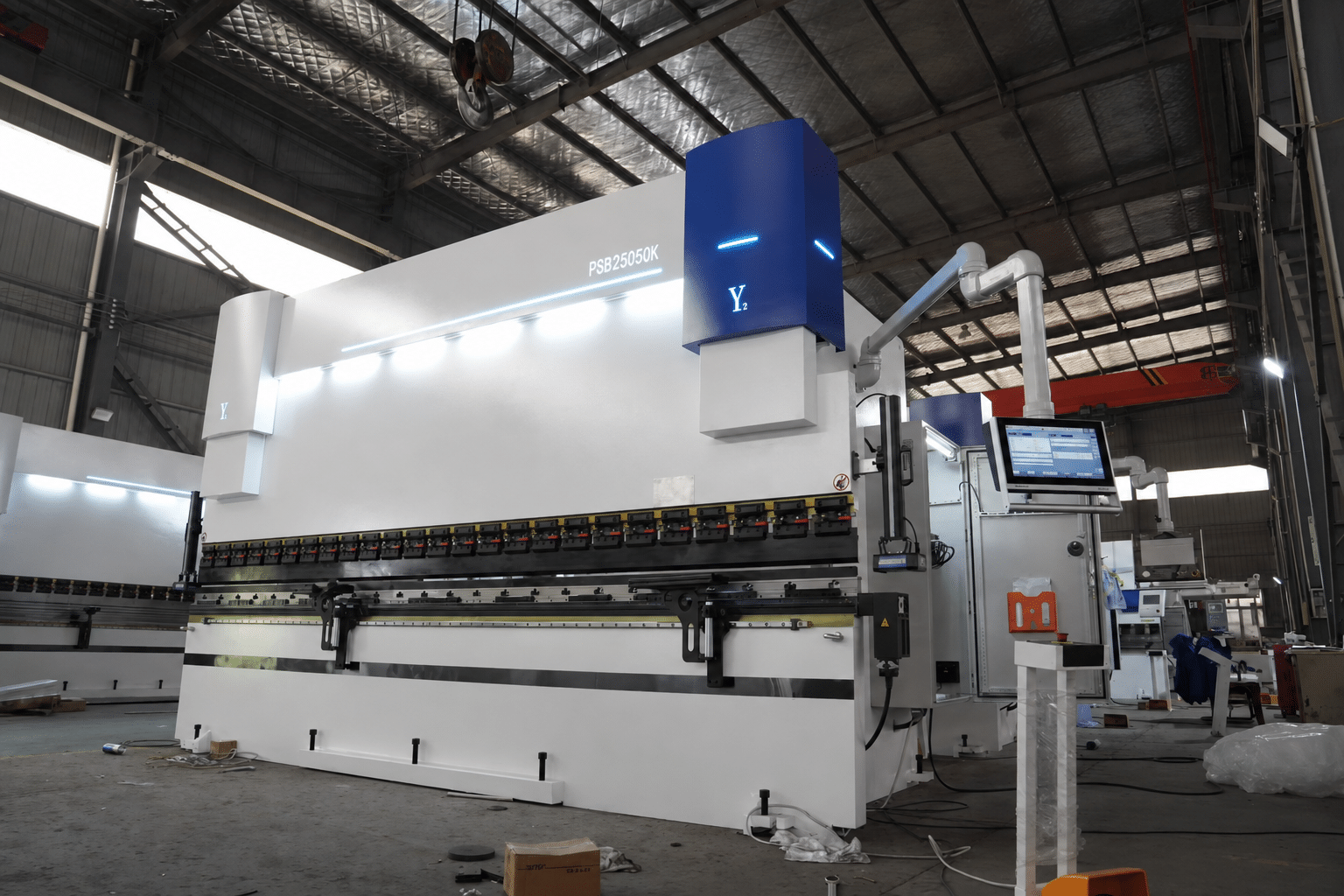
A CNC press brake can be configured with different tonnage, working length, CNC control systems, backgauge axes, crowning compensation, tooling, and safety systems.
A press brake is suitable for:
- Different workpiece sizes
- Different bending angles
- Small-batch and multi-variety production
- Medium and thick plate bending
- Complex bending parts
- Custom metal fabrication
- General industrial production
For workshops that need flexibility, a press brake is usually the first choice.
DG Bending Machine recommends models such as the PSB Main Servo Electro-Hydraulic Synchronous CNC Press Brake and the PSA Electro-Hydraulic Synchronous CNC Press Brake for customers who need stable bending accuracy, strong structure, reliable hydraulic performance, and long-term production capability.
2. What Is a Panel Bender?
A panel bender is an automatic bending machine designed mainly for panel-type sheet metal parts. Instead of using traditional press brake tooling for every bend, the panel bender uses automatic bending blades and positioning systems to bend panels with less manual operation.
A panel bender is suitable for:
- Standardized panel products
- Large-volume production
- Electrical cabinets
- Elevator panels
- Metal doors
- Enclosures
- Automotive panels
- Appliance panels
- Repeated bending parts
The biggest advantage of a panel bender is automation. It can reduce operator skill requirements, improve efficiency, and make production more consistent when the workpieces are standardized.
For factories with large batches of similar products, especially panel-type workpieces, a panel bender can significantly reduce labor dependence and improve daily output.
3. Press Brake vs Panel Bender: Main Difference
The biggest difference is flexibility vs automation.
A press brake is better when the factory processes many different workpieces, thicknesses, angles, and part sizes. A panel bender is better when the factory produces standardized panel parts in large quantities.
| Item | Press Brake | Panel Bender |
|---|---|---|
| Best for | Flexible bending and different workpieces | Standardized panel parts and batch production |
| Workpiece type | Various shapes, sizes, and thicknesses | Regular panel-type parts |
| Production volume | Small batch, medium batch, mixed production | Large batch, repeated products |
| Automation level | Manual or semi-automatic operation | Semi-automatic or fully automatic operation |
| Operator requirement | Higher operator skill required | Lower operator skill required |
| Bending flexibility | High | Limited to suitable panel parts |
| Thick plate bending | Better choice | Usually not the main advantage |
| Complex custom parts | More suitable | Less suitable |
| Standard panel production | Possible, but less efficient | More efficient |
| Machine cost | Usually lower than panel bender | Usually higher investment |
| Best industries | Metal fabrication, construction, machinery, custom parts | Electrical cabinets, elevator panels, metal doors, automotive panels |
In simple terms:
Choose a press brake if your factory needs flexibility.
Choose a panel bender if your factory needs efficiency for standardized panel production.
4. When Should You Choose a Press Brake?
A press brake is usually the better choice when your factory produces many types of parts or needs to handle different materials and thicknesses.
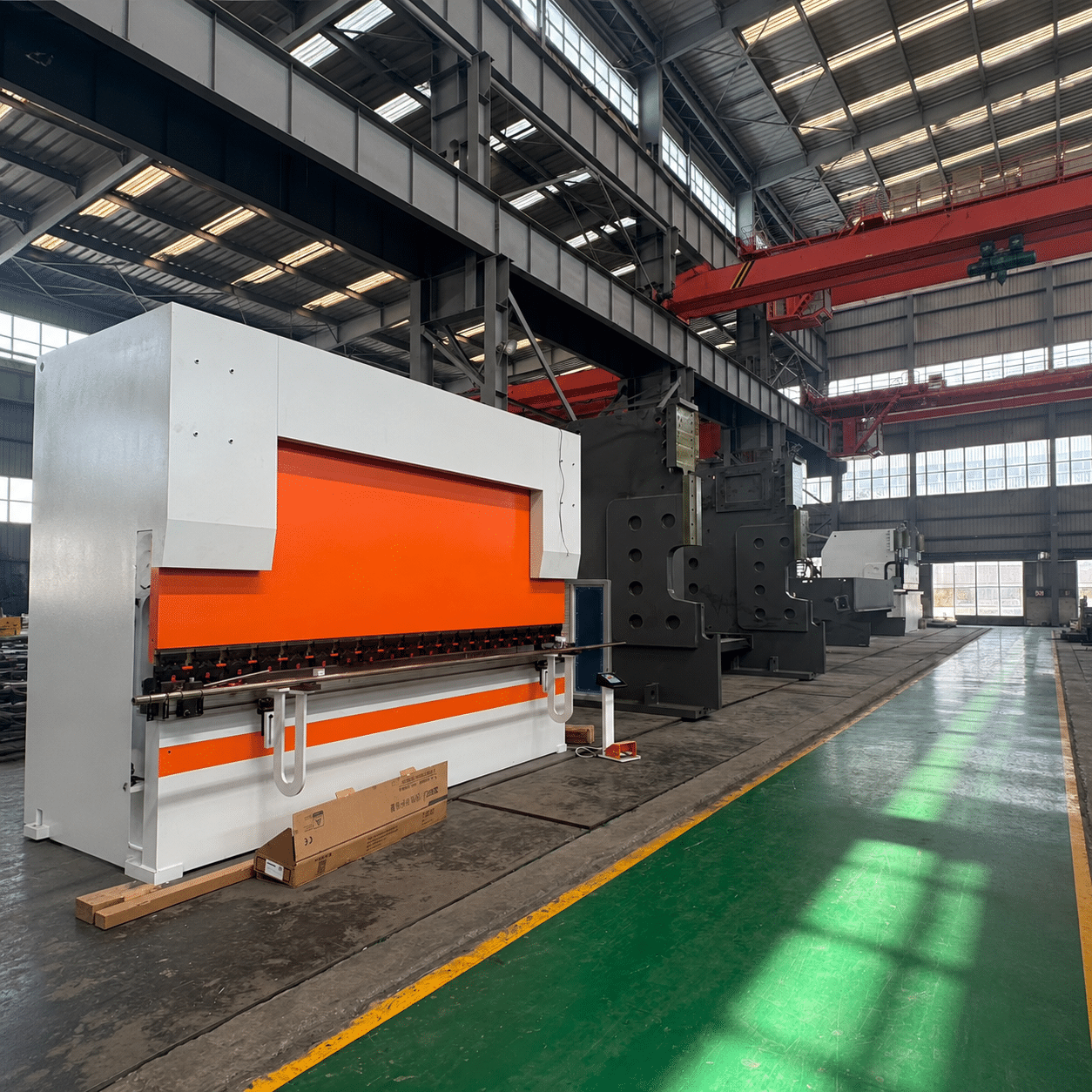
You should choose a press brake when:
- Your products have many different specifications
- Your bending angles are not always the same
- Your order quantity changes often
- Your materials include different thicknesses
- You need to bend thick plates
- Your workpieces are irregular or customized
- Your budget is limited
- Your operators can handle bending setup and tooling adjustment
- You need one machine for many different bending tasks
A press brake is widely used in metal fabrication workshops, construction metal processing, machinery manufacturing, shipbuilding components, automotive parts, and general sheet metal production.
For many factories, a CNC press brake is more practical because it can cover a wider range of bending jobs.
5. When Should You Choose a Panel Bender?
A panel bender is more suitable when the product is standardized and the production volume is high.
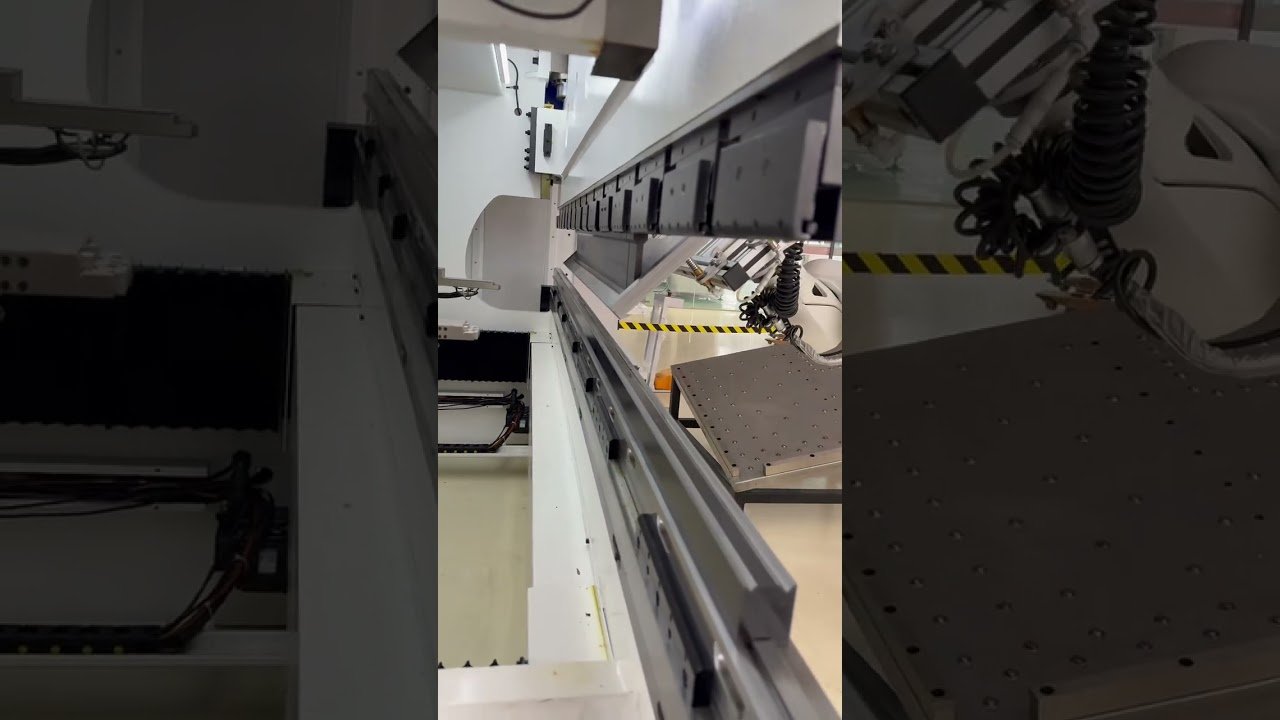
You should choose a panel bender when:
- Your products are mainly panel-type parts
- Your workpieces are regular and standardized
- Your order volume is large
- Your factory needs higher automation
- Labor cost is high
- Operator skill level is limited
- You want to reduce manual handling
- You need stable batch consistency
- You produce electrical cabinets, elevator panels, metal doors, or automotive panels
For example, in some automotive production factories, the product structure is standardized and the single product output is large. In this case, a panel bender with robotic loading or automatic feeding may be a better solution than relying only on manual press brake bending.
For elevator manufacturing, electrical cabinets, enclosures, and door panels, a panel bender can improve production efficiency if the workpiece type is suitable.
6. Automation and Labor Requirement
One important reason factories consider panel benders is labor cost.
A press brake often requires a skilled operator. The operator needs to understand tooling selection, bending sequence, backgauge positioning, angle adjustment, material springback, and machine setup. For complex parts, operator experience directly affects bending accuracy and production speed.
A panel bender has a lower requirement for operator skill. Once the machine is programmed and configured, it can complete repeated panel bending more automatically. Some panel bender systems can also be combined with robotic loading, automatic feeding, or production line integration.
However, automation is not always the best answer.
If your product changes frequently, a highly automated panel bender may not bring the expected return. If your parts are irregular, thick, or produced in small batches, a press brake may still be more practical.
7. Efficiency Comparison
Efficiency depends on the workpiece type.
For standardized panel parts, a panel bender is usually faster. It reduces manual turning, positioning, and repeated setup. This is useful for high-volume production.
For mixed workpieces, a press brake may be more efficient overall because it can adapt to different products more easily.
| Production Situation | Better Choice | Reason |
| Large batch of standard panels | Panel Bender | Higher automation and faster repeated bending |
| Small batch with many product types | Press Brake | More flexible for changing workpieces |
| Thick plate bending | Press Brake | Stronger bending capacity and wider tooling options |
| Electrical cabinet panels | Panel Bender | Efficient for repeated panel bending |
| Custom metal parts | Press Brake | Better for different shapes and angles |
| Budget-sensitive workshop | Press Brake | Lower initial investment |
| Factory with limited skilled operators | Panel Bender | Easier operation for repeated products |
| Workshop needing one machine for many jobs | Press Brake | Wider application range |
8. Cost and Investment Difference
A panel bender usually requires a higher initial investment than a standard CNC press brake. The machine structure, automation system, control system, and feeding method can all increase the cost.
A press brake usually has a lower entry cost and more flexible configuration options. Customers can choose different tonnage, working length, control system, backgauge axes, hydraulic system, and tooling according to budget and production requirements.
For budget-limited customers, a CNC press brake is often the safer first investment.
For factories with stable large-volume panel orders, the higher cost of a panel bender may be justified by labor savings, higher efficiency, and more consistent batch output.
Before making a decision, customers should compare:
- Initial machine cost
- Labor cost
- Daily production volume
- Product stability
- Operator skill level
- Tooling cost
- Automation requirement
- Long-term return on investment
The cheapest machine is not always the best choice. The right machine is the one that matches your product structure and production plan.
9. Product Type Is the Key Decision Factor
The most important question is not “which machine is better?”
The real question is:
What type of products do you produce?
If your factory produces many different parts, different sizes, different thicknesses, and different bending angles, a press brake is usually the better choice.
If your factory produces standardized panels in large quantities, a panel bender may be more efficient.
For example:
- A custom metal fabrication workshop usually needs a press brake.
- An electrical cabinet factory with repeated panel production may consider a panel bender.
- An elevator manufacturing factory may use both a press brake and a panel bender.
- A construction manufacturing factory working with heavy or irregular parts may need a press brake.
- An automotive panel supplier with large-volume standardized parts may consider automatic panel bending.
In many cases, press brake and panel bender are not competitors. They can work together in the same factory for different types of bending tasks.
10. Can a Panel Bender Replace a Press Brake?
A panel bender cannot completely replace a press brake.
A panel bender is excellent for suitable panel-type workpieces, but it is not designed for every bending application. It may not be ideal for thick plates, irregular parts, short custom runs, complex non-panel components, or heavy-duty bending.
A press brake has a wider application range. It can process more materials, thicknesses, angles, and special parts. It is still one of the most important machines in general sheet metal fabrication.
For this reason, many factories choose:
- Press brake for flexible bending
- Panel bender for standardized panel production
- Laser cutting machine for accurate cutting
- V grooving machine for sharp bending edges
- Shearing machine for straight sheet cutting
If you are planning a full workshop configuration, you can also review this sheet metal fabrication machines guide to understand how different equipment works together.
11. Recommended DG Bending Machine Solutions
DG Bending Machine can recommend suitable bending equipment based on customer production requirements.
PSB Main Servo Electro-Hydraulic Synchronous CNC Press Brake
The PSB Main Servo Electro-Hydraulic Synchronous CNC Press Brake is suitable for customers who need high precision, stable performance, energy-saving operation, reliable hydraulic control, and long-term industrial production.
It is suitable for:
- Precision sheet metal fabrication
- Automotive parts
- Elevator parts
- Electrical cabinets
- Medium and heavy-duty bending
- Customers requiring stable batch production
PSA Electro-Hydraulic Synchronous CNC Press Brake
The PSA Electro-Hydraulic Synchronous CNC Press Brake is suitable for customers who need reliable electro-hydraulic synchronization, stable bending accuracy, and practical industrial production capability.
It is suitable for:
- General sheet metal fabrication
- Electrical cabinet production
- Machinery parts
- Construction metal components
- Batch production workshops
Panel Bender
A panel bender is suitable for customers who produce regular panel-type workpieces with large batch quantity. It can be customized as a semi-automatic or fully automatic system according to the customer’s production requirements.
It is suitable for:
- Electrical cabinets
- Elevator panels
- Metal doors
- Enclosures
- Automotive panel production
- Large-volume standardized sheet metal parts
12. What Information Should You Provide Before Choosing?
To recommend the right bending machine, the supplier needs to understand your actual production situation.
Please prepare:
- Material type
- Material thickness
- Workpiece size
- Product drawings
- Bending angle
- Bending length
- Product batch quantity
- Accuracy requirements
- Whether the products are standardized
- Whether automation is required
- Current production problems
- Budget range
- Workshop layout
- Existing equipment
With this information, DG Bending Machine can help compare whether a press brake, panel bender, or combined bending solution is more suitable for your production.
FAQ
1. What is the main difference between a press brake and a panel bender?
A press brake is more flexible and suitable for different workpieces, materials, thicknesses, and bending angles. A panel bender is more suitable for standardized panel-type parts and high-volume automatic bending.
2. Can a panel bender completely replace a press brake?
No. A panel bender cannot completely replace a press brake. It is efficient for suitable panel parts, but a press brake is more flexible for thick plates, custom parts, different bending angles, and mixed production.
3. When should I choose a panel bender?
You should choose a panel bender when your products are standardized, the order quantity is large, the workpieces are mainly panels, and you want to reduce labor requirements and improve automation.
4. When should I choose a press brake?
You should choose a press brake when your factory handles different workpieces, small-batch orders, thick plates, irregular shapes, or products requiring flexible bending angles and tooling.
5. Which machine is better for budget-limited buyers?
For budget-limited buyers, a CNC press brake is usually the more practical first choice because it has lower initial investment and wider application flexibility.
6. Can press brake and panel bender be used together?
Yes. Many factories use both machines. A press brake handles flexible and complex bending tasks, while a panel bender handles standardized panel production with higher automation.
Conclusion
Press brake and panel bender are both important bending machines, but they are suitable for different production needs.
A CNC press brake is better for flexible bending, different workpiece sizes, varied bending angles, thick plates, and custom sheet metal parts. A panel bender is better for standardized panel-type products, large production volume, lower operator skill requirements, and automated bending.
If your factory produces many types of parts, choose a press brake. If your factory produces large quantities of regular panel products, consider a panel bender. If your production includes both flexible parts and standardized panels, using both machines may be the best solution.
To choose the right bending machine, please provide your material type, thickness, workpiece size, drawings, production volume, automation requirements, budget, and workshop layout. Contact DG Bending Machine to discuss the most suitable bending machine configuration for your production needs.