
Press brake accuracy is one of the most critical factors in modern sheet metal fabrication. Whether manufacturing electrical cabinets, elevator panels, automotive parts, or construction components, inaccurate bending can lead to assembly problems, material waste, and costly production delays.
Among all factors affecting bending precision, the backgauge system plays a key role in controlling dimensional consistency. In this guide, we will explain common causes of press brake accuracy issues, the relationship between backgauge positioning and bending precision, and how manufacturers can improve overall production quality.
If you are looking for advanced CNC bending equipment, explore our complete range of Press Brake Machines designed for high-precision sheet metal fabrication.
What Is Press Brake Accuracy?
Press brake accuracy refers to the machine’s ability to repeatedly produce bends with consistent angles and dimensions.
Several factors determine bending accuracy:
- Backgauge positioning precision
- Y1/Y2 synchronization accuracy
- Crowning compensation performance
- Servo system stability
- Tooling precision
- Material consistency
- CNC control capability
Even when bend angles remain correct, inaccurate backgauge positioning can still create dimensional errors.
What Is a Press Brake Backgauge System?
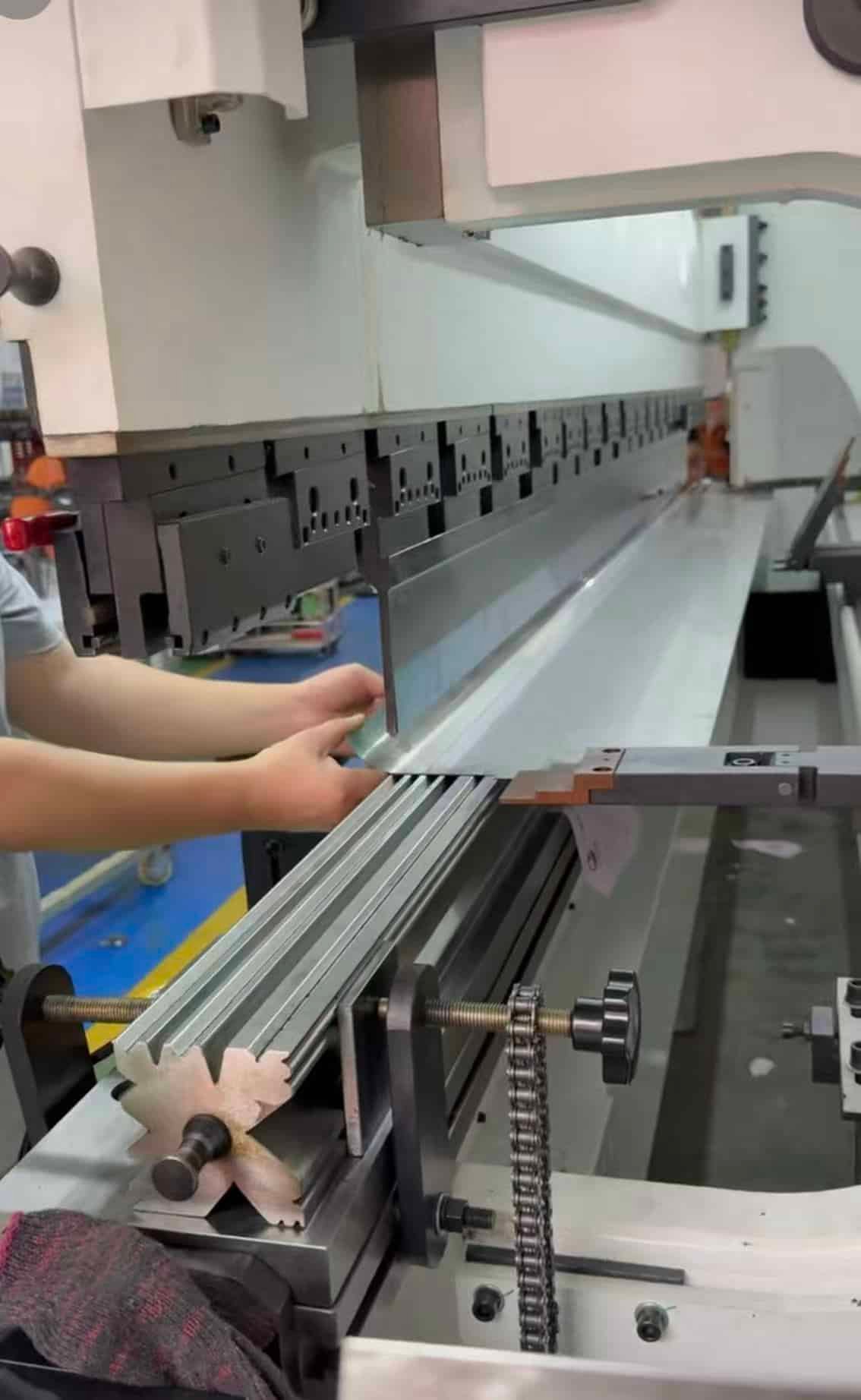
The backgauge system positions the sheet metal before each bending operation.
Its primary function is to determine flange dimensions and maintain consistent part sizes throughout production.
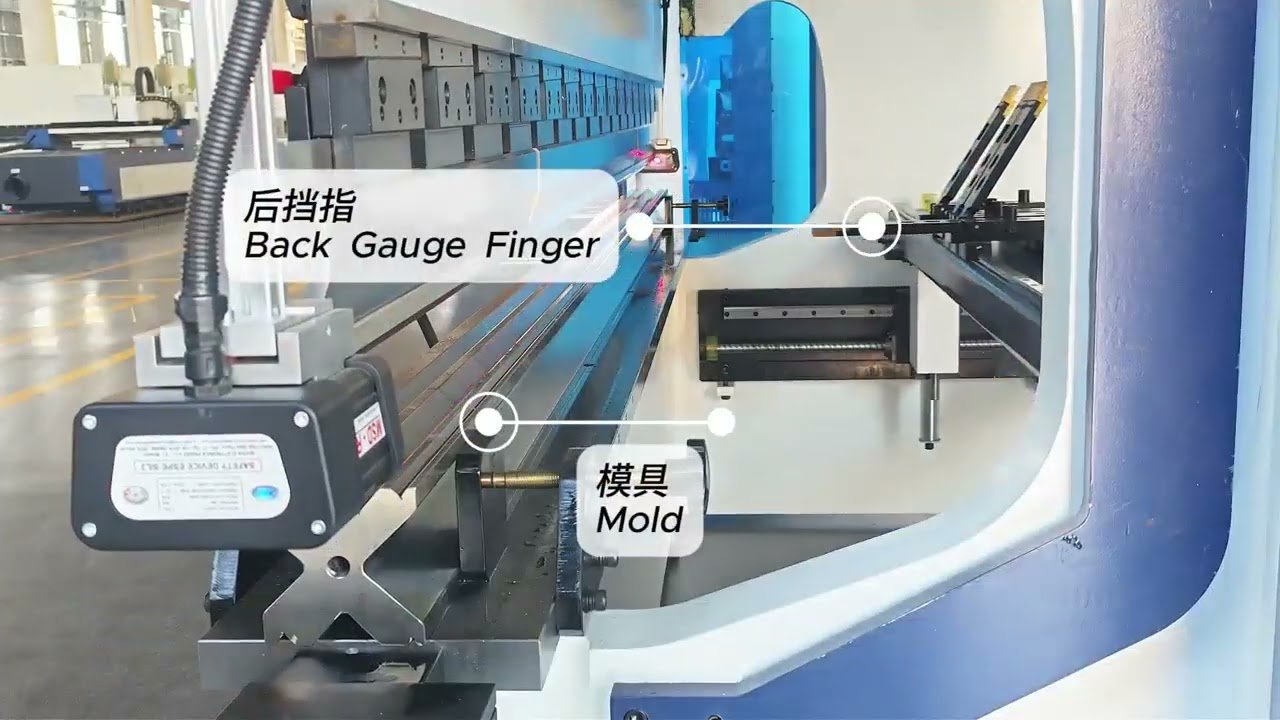
A modern CNC backgauge typically consists of:
- Servo motors
- Ball screws
- Linear guide rails
- Position encoders
- CNC controller
Machines such as our Electro-Hydraulic CNC Press Brake utilize high-precision servo-controlled backgauge systems for repeatable positioning accuracy.
How Does Backgauge Positioning Affect Press Brake Accuracy?
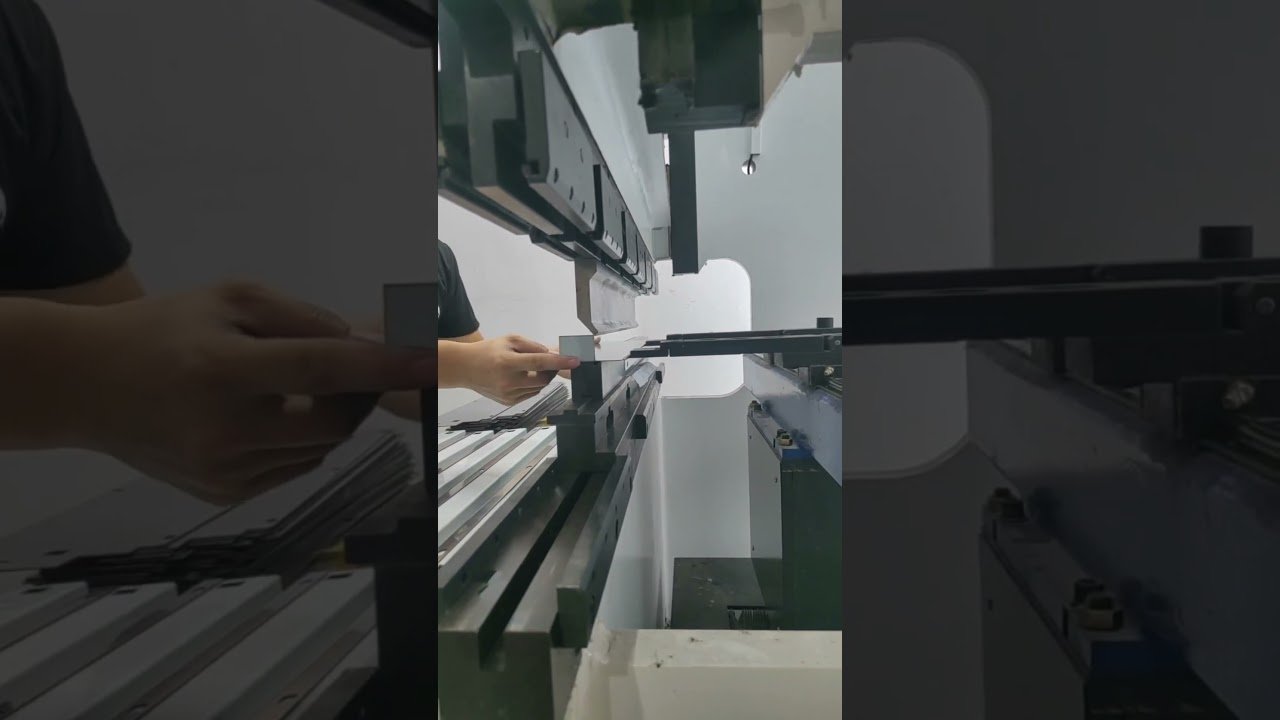
Every bend starts with positioning.
If the sheet is positioned incorrectly by even a small amount, the final flange length will be inaccurate.
Common results include:
- Incorrect part dimensions
- Assembly difficulties
- Inconsistent batch production
- Material waste
- Reduced productivity
Industries such as Elevator Manufacturing and Automotive Manufacturing often require extremely high dimensional consistency.
Common Backgauge Positioning Problems
- Repeatability errors
- Dimension variation between parts
- Position drift
- Servo alarms
- High-speed positioning errors
- Backgauge vibration
- Mechanical sticking
These issues often become more noticeable during long production runs.
Main Causes of Press Brake Accuracy Problems
1. Ball Screw Wear
Wear in the ball screw system creates backlash and positioning inaccuracies.
2. Guide Rail Wear
Damaged guide rails reduce movement stability and repeatability.
3. Servo Motor Issues
Servo instability can cause inconsistent positioning and dimensional errors.
4. Encoder Feedback Errors
Incorrect encoder signals affect the CNC system’s positioning calculations.
5. Mechanical Misalignment
Poor installation or structural movement can lead to systematic positioning errors.
6. Insufficient Maintenance
Lack of lubrication and regular inspection accelerates component wear.
How Servo Systems Improve Press Brake Accuracy
Modern servo technology dramatically improves positioning performance.
Benefits include:
- Higher positioning speed
- Better repeatability
- Reduced positioning error
- Automatic correction capability
- Lower maintenance requirements
Advanced models such as the Main Servo Electro-Hydraulic CNC Press Brake and Full Electric CNC Press Brake provide excellent positioning performance for precision applications.
How to Improve Press Brake Accuracy
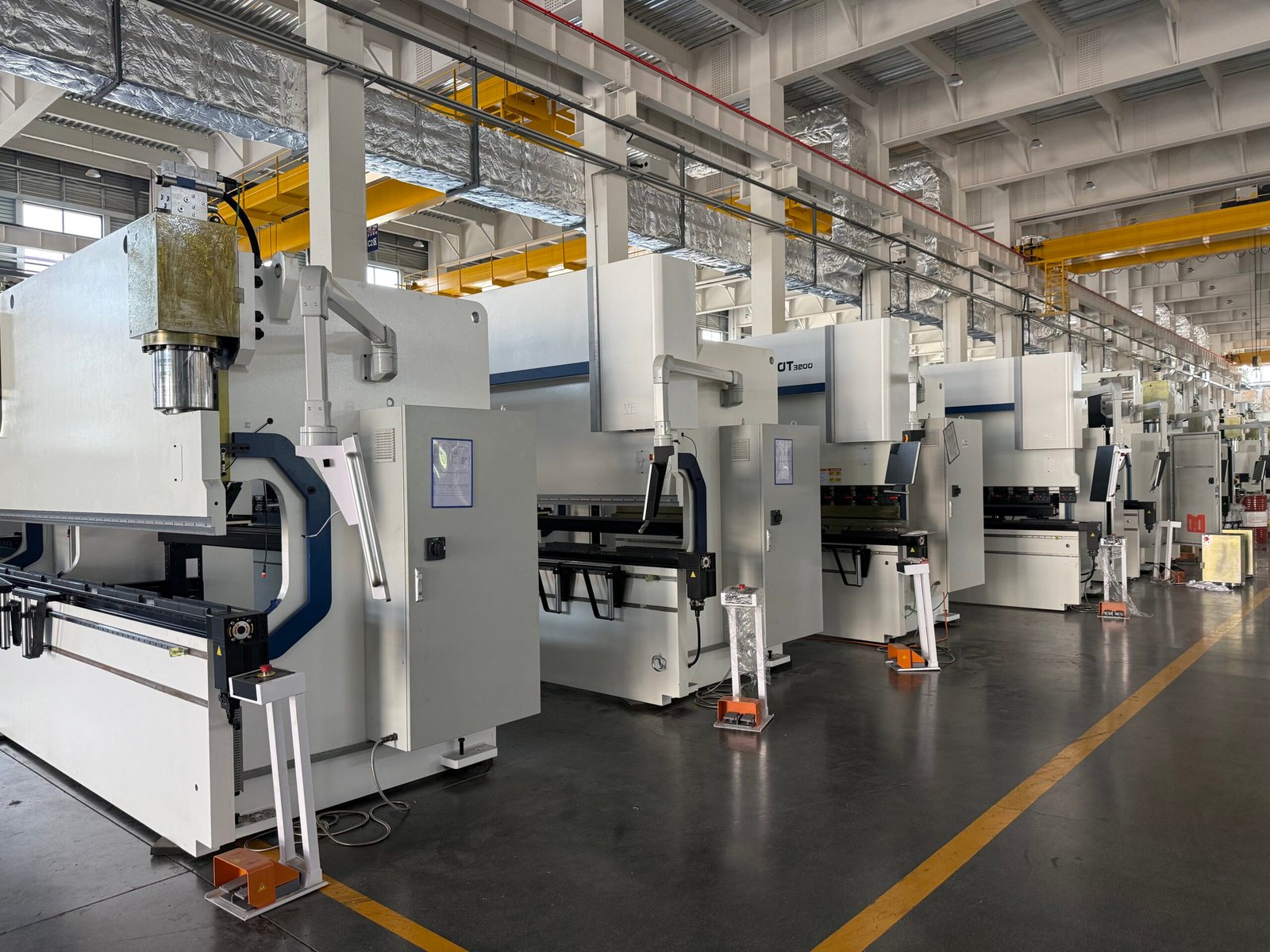
- Perform regular machine calibration
- Inspect ball screws and guide rails
- Maintain proper lubrication
- Verify servo motor performance
- Monitor encoder feedback signals
- Use high-quality tooling
- Check repeatability regularly
- Train operators on correct setup procedures
Industries Requiring High Press Brake Accuracy
- Metal Fabrication Workshop
- Automotive Manufacturing
- Aerospace Industry
- Elevator Manufacturing
- Shipbuilding Industry
- Construction Industry
Troubleshooting Press Brake Accuracy Issues
When dimensional inconsistencies occur, technicians should follow these steps:
- Check repeatability accuracy
- Inspect ball screw wear
- Verify guide rail condition
- Test servo motor performance
- Review encoder feedback data
- Check CNC parameters
- Verify machine alignment
A structured troubleshooting process can significantly reduce downtime and improve production efficiency.
Real Production Experience
One customer producing electrical cabinet components experienced dimensional variation during batch production.
After inspection, technicians discovered wear in the backgauge transmission system. Following recalibration and component replacement, repeatability improved significantly and production efficiency increased.
Conclusion
Achieving excellent press brake accuracy requires a combination of advanced CNC controls, reliable servo systems, precise backgauge positioning, and preventive maintenance.
Investing in a high-quality CNC press brake can significantly improve dimensional consistency, reduce waste, and increase productivity.
To learn more about our precision bending solutions, visit our Press Brake Product Center or contact our engineering team today.