Laser cutting machine and shearing machine are both commonly used for sheet metal cutting, but they are designed for different production needs. A laser cutting machine is suitable for complex shapes, holes, curves, and high-precision profiles, while a shearing machine is mainly used for straight-line cutting and batch sheet preparation.
For metal fabrication factories, sheet metal workshops, purchasing managers, engineers, and factory owners, choosing the wrong cutting machine can lead to higher investment cost, low cutting efficiency, poor production matching, or limited processing capability.
This guide explains how to choose between a laser cutting machine and a shearing machine based on cutting shape, material thickness, cutting accuracy, production efficiency, budget, and future processing requirements.
1. What Is a Laser Cutting Machine?
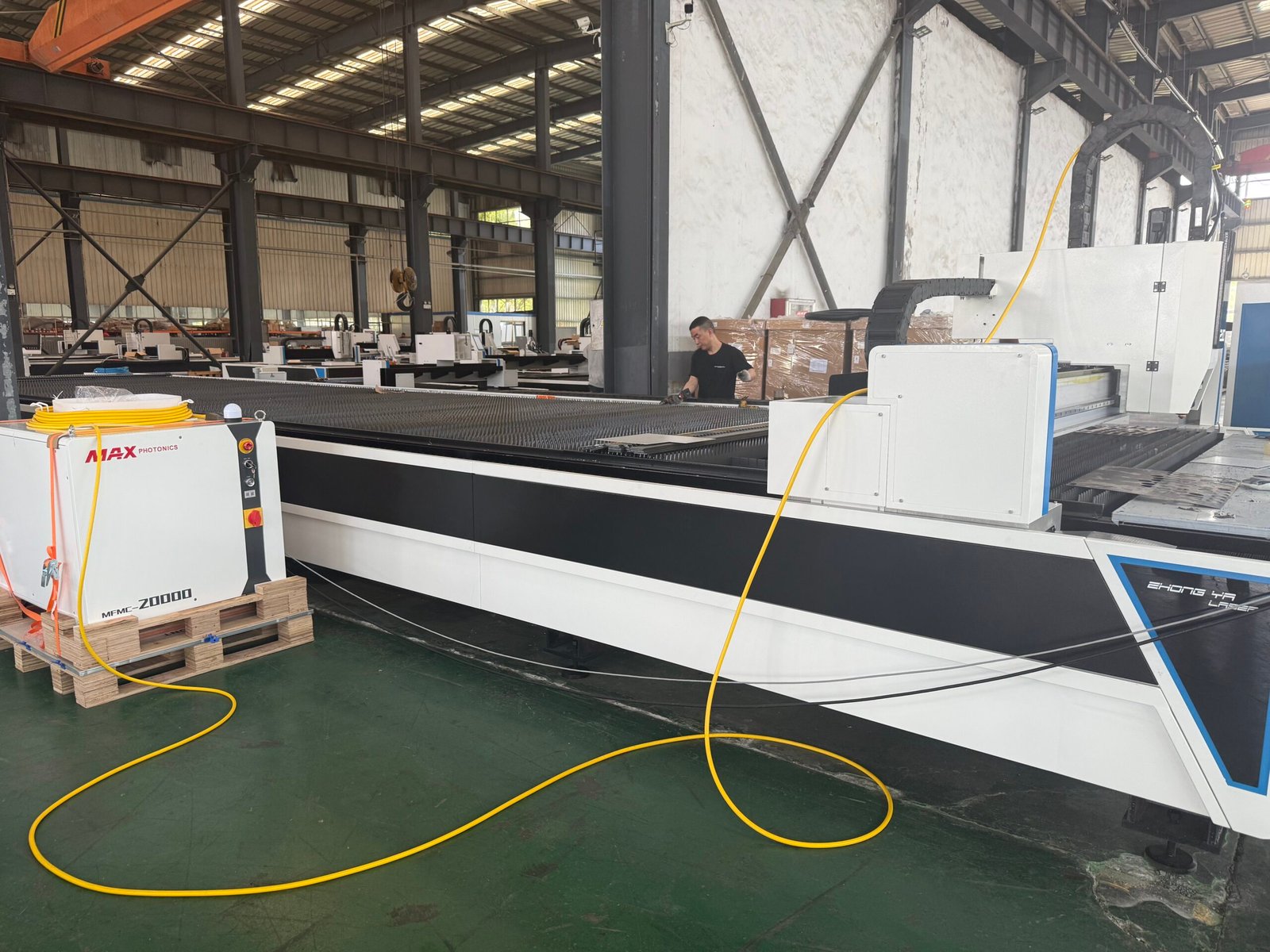
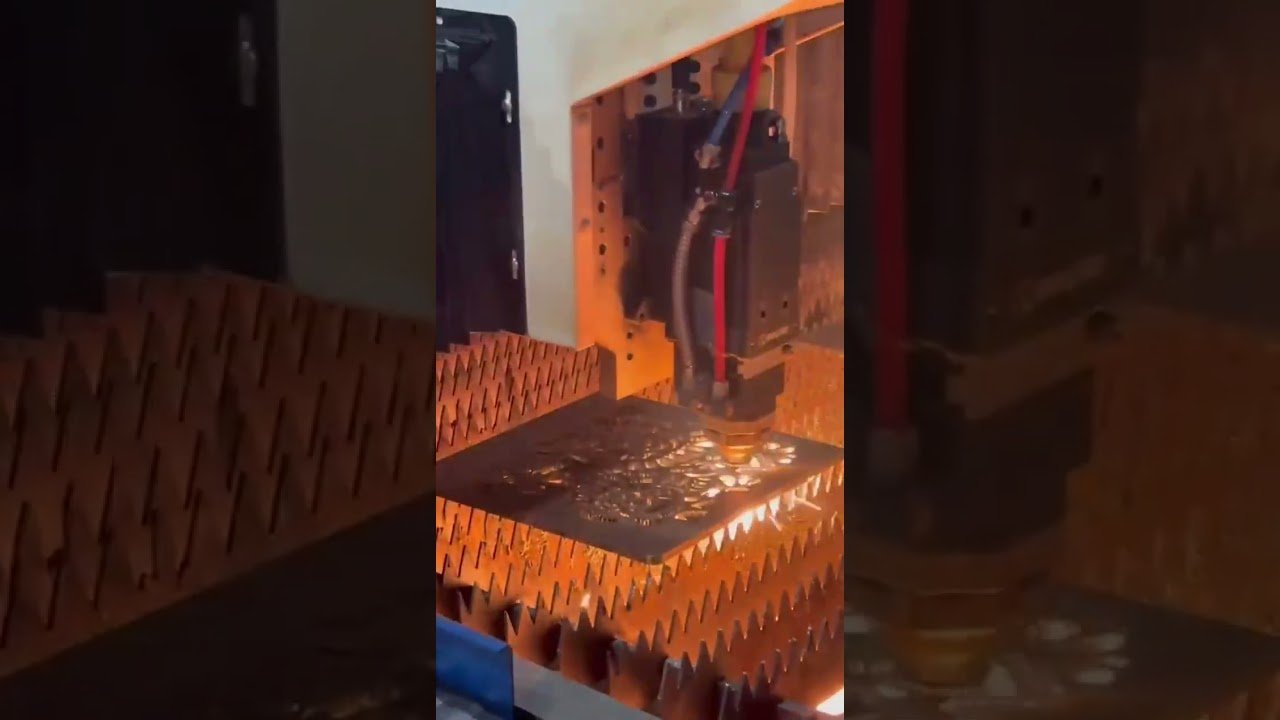
A laser cutting machine uses a high-power laser beam to cut sheet metal according to digital drawings. It can cut straight lines, curves, holes, slots, irregular profiles, and complex shapes with high flexibility.
A fiber laser cutting machine is suitable for:
- Carbon steel cutting
- Stainless steel cutting
- Aluminum cutting
- Galvanized sheet cutting
- Complex profiles
- Holes and slots
- Small-batch and multi-variety production
- High-precision sheet metal parts
The biggest advantage of a laser cutting machine is flexibility. If your factory needs to cut different product shapes every day, or if your parts include holes, curves, or irregular profiles, laser cutting is usually the better choice.
A fiber laser cutting machine is commonly used in electrical cabinets, automotive parts, elevator components, machinery covers, metal enclosures, construction metal parts, and general sheet metal fabrication.
2. What Is a Shearing Machine?
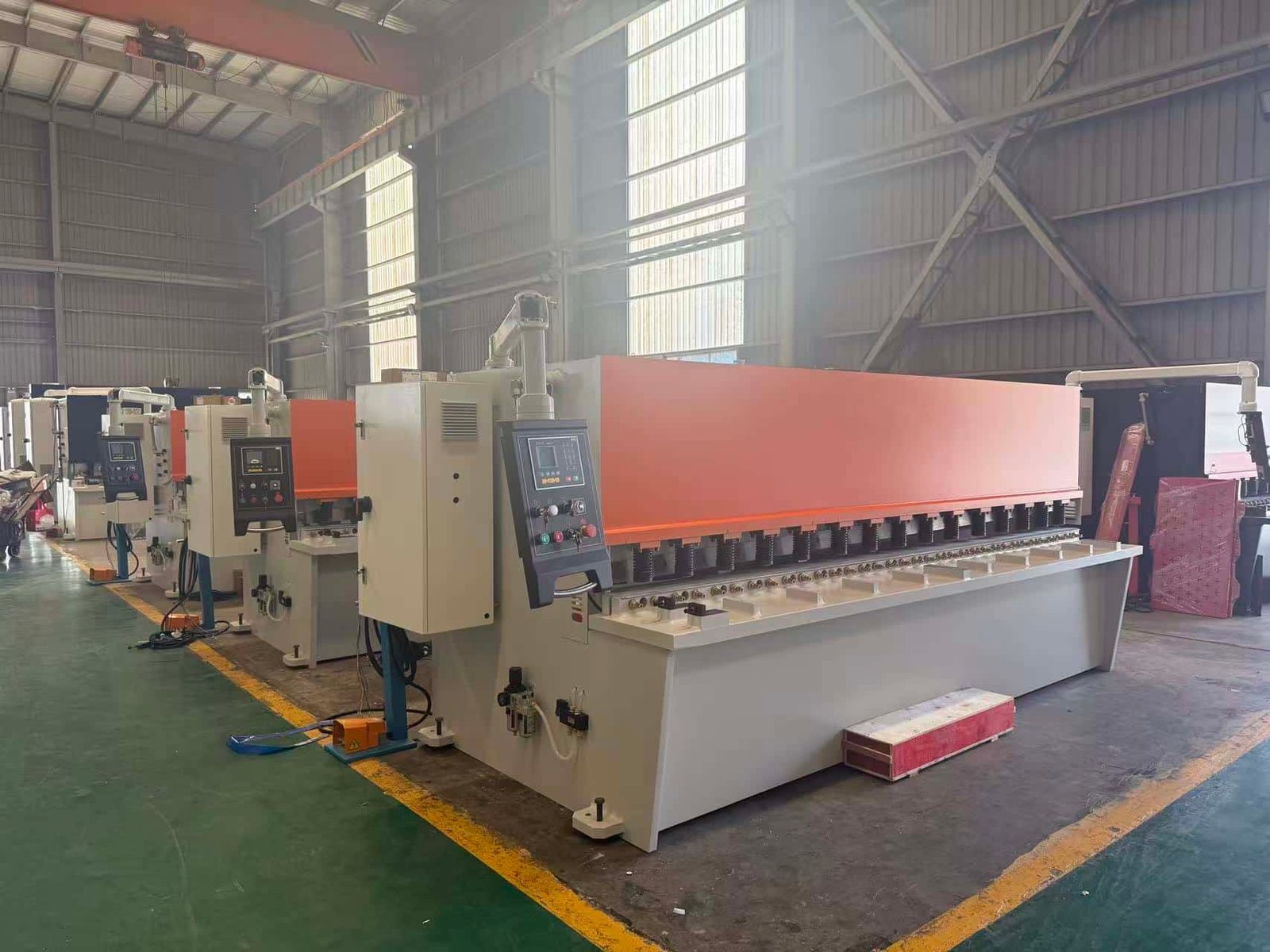
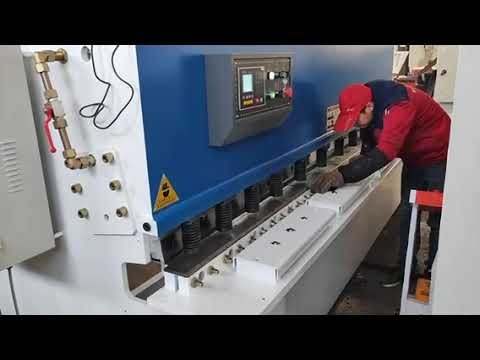
A shearing machine is used to cut sheet metal in straight lines. It uses upper and lower blades to shear the metal sheet into required lengths or rectangular plates.
A shearing machine is suitable for:
- Straight-line cutting
- Rectangular sheet cutting
- Strip cutting
- Batch plate preparation
- Simple sheet metal processing
- Lower-cost cutting requirements
- Workshops with stable and simple cutting tasks
Compared with laser cutting, shearing is simpler and often faster for straight cuts, especially when the material thickness is within a common processing range. For example, when cutting straight sheets under 6 mm, a shearing machine can be very efficient and cost-effective.
The main limitation is that a shearing machine cannot cut complex shapes, holes, curves, or irregular profiles. It is mainly designed for straight-line cutting.
3. Laser Cutting Machine vs Shearing Machine: Main Difference
The main difference is cutting flexibility.
A laser cutting machine can cut almost any shape based on drawings. A shearing machine cuts straight lines only.
| Item | Laser Cutting Machine | Shearing Machine |
|---|---|---|
| Main Function | Cuts complex shapes and profiles | Cuts straight lines and rectangular sheets |
| Cutting Shape | Straight lines, curves, holes, slots, irregular parts | Straight-line cutting only |
| Best For | Complex sheet metal parts | Simple straight cutting and batch blanking |
| Cutting Accuracy | High profile accuracy | High straight-line cutting accuracy |
| Cutting Speed | Good for flexible and complex cutting | Very efficient for straight cuts, especially thin sheets |
| Equipment Cost | Higher investment | Lower investment |
| Operation Requirement | Requires programming and parameter setting | Easier operation |
| Flexibility | High | Limited |
| Suitable Production | Multi-variety, flexible production | Repeated straight-line cutting |
| Common Use | Metal fabrication, enclosures, automotive, elevator, machinery parts | Plate preparation, straight sheet cutting, basic workshops |
In simple terms:
Choose a laser cutting machine if your parts have complex shapes.
Choose a shearing machine if your work is mainly straight-line cutting.
4. When Should You Choose a Laser Cutting Machine?
You should choose a laser cutting machine when your products require flexible cutting and high shape accuracy.
A laser cutting machine is more suitable when:
- The product shape is complex
- The parts include holes, slots, curves, or irregular outlines
- The drawings change frequently
- You need high cutting accuracy
- You process different types of sheet metal parts
- You need flexible small-batch production
- You want to reduce mold or tooling dependence
- The cut parts will go to bending, welding, or assembly
- Your factory wants to upgrade production flexibility
For example, if your factory produces metal enclosures, machine covers, elevator parts, electrical cabinet panels, or automotive sheet metal components, laser cutting can improve flexibility and accuracy.
Laser cutting is especially useful when the product cannot be cut by simple straight-line shearing.
5. When Should You Choose a Shearing Machine?
You should choose a shearing machine when your cutting work is mainly straight-line cutting and your budget is limited.
A shearing machine is more suitable when:
- You mainly cut straight lines
- Your products are rectangular sheets or strips
- Your material thickness is within the shearing capacity
- Your cutting shape is simple
- You need high straight-line cutting efficiency
- You want lower equipment investment
- You need basic sheet preparation before bending
- Your workshop does not require complex cutting shapes
For straight cutting, a shearing machine can be very practical. It is often used before bending, welding, punching, or other sheet metal processing steps.
If your factory only needs straight cutting and does not process complex profiles, buying a high-configuration laser cutting machine may not be necessary at the beginning.
6. Cutting Shape Is the First Decision Factor
The first question is:
What shape do you need to cut?
If you need to cut complex shapes, choose a laser cutting machine.
If you only need straight cutting, choose a shearing machine.
| Cutting Requirement | Recommended Machine |
| Straight strips | Shearing Machine |
| Rectangular sheets | Shearing Machine |
| Holes and slots | Laser Cutting Machine |
| Curves | Laser Cutting Machine |
| Irregular profiles | Laser Cutting Machine |
| Complex sheet metal parts | Laser Cutting Machine |
| Basic plate preparation | Shearing Machine |
| Flexible product changes | Laser Cutting Machine |
Many customers make the mistake of buying a laser cutting machine for simple straight cutting. This may increase investment cost unnecessarily. Some customers also choose a shearing machine when they actually need complex profile cutting, which limits production capability.
The product drawing should decide the cutting machine.
7. Material Thickness and Cutting Capacity
Material thickness is another important factor.
For laser cutting, the required laser power depends on:
- Material type
- Material thickness
- Cutting speed
- Edge quality requirement
- Assist gas
- Production capacity
For shearing machines, the selection depends on:
- Maximum cutting thickness
- Cutting length
- Material strength
- Blade clearance
- Hydraulic system
- Backgauge accuracy
In general, laser cutting is more flexible for different shapes and processing requirements. Shearing machines are efficient for straight-line cutting, especially for common sheet thickness ranges.
For some factories, both machines may be used together. The laser cutting machine handles complex parts, while the shearing machine handles straight cutting and batch plate preparation.
8. Cutting Accuracy: Which One Is Better?
Both machines can provide good accuracy, but the type of accuracy is different.
A shearing machine provides good straight-line cutting accuracy. It is suitable for cutting long straight plates, strips, or rectangular sheets.
A laser cutting machine provides good contour cutting accuracy. It is suitable for parts with complex profiles, holes, curves, and detailed shapes.
| Accuracy Type | Better Choice |
| Straight-line cutting accuracy | Shearing Machine |
| Complex contour accuracy | Laser Cutting Machine |
| Hole position accuracy | Laser Cutting Machine |
| Repeated rectangular sheet cutting | Shearing Machine |
| Profile matching before bending | Laser Cutting Machine |
| Flexible drawing-based cutting | Laser Cutting Machine |
If your product only requires accurate straight cuts, a shearing machine can be a good choice. If your product requires accurate holes, slots, curves, and profile shapes, a laser cutting machine is more suitable.
9. Cutting Speed and Production Efficiency
Cutting speed depends on the workpiece shape and production type.
For straight cuts under common thickness ranges, such as sheet metal under 6 mm, a shearing machine can be very efficient. It can cut long straight lines quickly and is suitable for repeated straight-line cutting.
For complex parts, a laser cutting machine is more efficient because it can complete different shapes directly from digital drawings. It can cut holes, slots, curves, and outlines in one process.
In real production:
- For straight-line batch cutting, shearing may be faster and more economical.
- For complex profiles, laser cutting is usually more efficient.
- For factories with changing product drawings, laser cutting provides better flexibility.
- For simple plate preparation, shearing is practical and cost-effective.
The best choice depends on your actual production structure.
10. Equipment Cost and Budget
Budget is a very important factor for many buyers.
A laser cutting machine usually requires a higher investment than a shearing machine. It also requires more attention to laser source, cutting head, control system, gas system, maintenance, and operation training.
A shearing machine has a lower investment cost and simpler operation. It is suitable for factories that mainly need straight cutting and want to control equipment budget.
| Budget Situation | Recommended Choice |
| Limited budget, straight cutting only | Shearing Machine |
| Higher budget, complex cutting needs | Laser Cutting Machine |
| New workshop with basic sheet cutting | Shearing Machine + Press Brake |
| Modern flexible fabrication workshop | Laser Cutting Machine + Press Brake |
| Factory with both simple and complex cutting | Laser Cutting Machine + Shearing Machine |
For budget-limited customers, the shearing machine is often the safer first choice if the cutting work is simple. For customers who need flexible production, the laser cutting machine may bring better long-term value.
11. Do You Need to Consider the Next Bending Process?
Yes. Cutting should not be considered separately from bending.
Most sheet metal parts need bending after cutting. If the cutting method does not match the bending process, problems may appear later.
For example:
- The cut size is not suitable for bending allowance
- Hole positions shift after bending
- Part edges are not suitable for forming
- Cutting speed is faster than bending capacity
- The factory has cutting capacity but not enough bending capacity
If your parts need bending after cutting, you should also consider the CNC press brake capacity, including bending tonnage, bending length, tooling, backgauge, and accuracy.
For a complete production line, cutting and bending equipment should be matched together. You can also read this guide about how laser cutting machine and press brake work together in sheet metal fabrication.
12. Common Customer Mistakes
Many customers make equipment selection mistakes because they only compare machine price or only focus on one function.
Mistake 1: Buying a high-configuration laser cutting machine for simple straight cutting
If your factory only cuts straight lines and rectangular sheets, a shearing machine may be more economical.
Mistake 2: Choosing a shearing machine for complex shapes
A shearing machine cannot cut holes, curves, or irregular profiles. If your products require these features, laser cutting is necessary.
Mistake 3: Ignoring material thickness
Laser power and shearing capacity must match the material thickness. If the equipment capacity is not enough, production efficiency and quality will be affected.
Mistake 4: Ignoring the bending process
If cutting and bending are not matched, the whole workshop may still have bottlenecks even after buying new equipment.
Mistake 5: Only considering today’s orders
Your equipment should also support future products, thicker materials, higher output, or more complex drawings.
13. Which Machine Is Better for Different Factories?
Basic Sheet Metal Workshop
If the workshop mainly handles straight cutting and basic bending, a shearing machine and press brake may be enough.
Recommended equipment:
- Shearing Machine
- CNC Press Brake
- Welding equipment
Flexible Metal Fabrication Workshop
If the workshop processes different parts and changing drawings, a laser cutting machine is more suitable.
Recommended equipment:
- Laser Cutting Machine
- CNC Press Brake
- V Grooving Machine if needed
- Welding equipment
Electrical Cabinet and Enclosure Factory
If the factory needs holes, slots, panels, covers, and bending, laser cutting and press brake are often more suitable.
Recommended equipment:
- Laser Cutting Machine
- CNC Press Brake
- Panel Bender if high-volume panels are produced
Budget-Limited Factory
If the factory mainly cuts straight sheets and does not need complex profiles, a shearing machine may be selected first.
Recommended equipment:
- Hydraulic Shearing Machine
- CNC Press Brake
Modern Production Workshop
If the factory needs flexibility, efficiency, and product variety, both laser cutting machine and shearing machine can be used together.
Recommended equipment:
- Fiber Laser Cutting Machine
- CNC Shearing Machine
- CNC Press Brake
- Supporting machines according to application
For more workshop planning ideas, you can visit the metal fabrication workshop solution page.
14. Recommended DG Bending Machine Solutions
DG Bending Machine can recommend suitable cutting equipment according to customer production requirements.
Fiber Laser Cutting Machine
A fiber laser cutting machine is recommended for customers who need complex shapes, holes, curves, high contour accuracy, and flexible production.
It is suitable for:
- Metal fabrication workshops
- Electrical cabinet production
- Automotive components
- Elevator parts
- Machinery covers
- Construction metal parts
Hydraulic Shearing Machine
A hydraulic shearing machine is recommended for customers who need straight-line cutting, rectangular sheet preparation, and cost-effective cutting.
It is suitable for:
- Basic sheet cutting
- Straight strip cutting
- Batch plate preparation
- Budget-sensitive workshops
- Pre-cutting before bending
CNC Shearing Machine
A CNC shearing machine is suitable for customers who need better cutting control, backgauge positioning, and repeated sheet cutting accuracy.
It is suitable for:
- Batch sheet preparation
- More stable straight cutting
- Workshops requiring higher cutting consistency
DG Bending Machine can also recommend complete metal fabrication machine solutions based on your cutting, bending, forming, and production requirements.
15. What Information Should You Provide Before Buying?
To recommend the right cutting machine, customers should provide:
- Material type
- Material thickness
- Cutting shape
- Cutting length
- Sheet size
- Required accuracy
- Production volume
- Product drawings
- Budget
- Whether bending is required after cutting
- Workshop layout
- Future production plan
With this information, the supplier can help decide whether a laser cutting machine, shearing machine, or combined cutting solution is more suitable.
FAQ
1. Can a shearing machine replace a laser cutting machine?
A shearing machine can replace a laser cutting machine only for straight-line cutting. It cannot cut holes, curves, slots, or irregular profiles. If your products require complex shapes, you need a laser cutting machine.
2. Is a laser cutting machine always better than a shearing machine?
No. A laser cutting machine is more flexible, but it is not always the best choice. If your work is mainly straight cutting and your budget is limited, a shearing machine may be more practical.
3. What type of customer is suitable for a shearing machine?
A shearing machine is suitable for customers who mainly cut straight sheets, rectangular plates, or strips. It is also suitable for workshops that need cost-effective cutting and basic sheet preparation before bending.
4. What type of customer is suitable for a laser cutting machine?
A laser cutting machine is suitable for customers who need complex cutting shapes, holes, curves, high cutting accuracy, flexible production, and frequent product changes.
5. Which machine should I choose if my budget is limited?
If your cutting work is mainly straight-line cutting, choose a shearing machine first. If your products include complex shapes or holes, you may need to invest in a laser cutting machine.
6. Should I consider press brake selection when choosing cutting equipment?
Yes. Most sheet metal parts need bending after cutting. The cutting machine should match your press brake capacity, including bending length, tonnage, tooling, and production speed.
Conclusion
Choosing between a laser cutting machine and a shearing machine depends on your product shape, material thickness, cutting accuracy, production efficiency, budget, and future production needs.
A laser cutting machine is better for complex shapes, holes, curves, profile cutting, and flexible sheet metal production. A shearing machine is better for straight-line cutting, rectangular sheets, batch blanking, and budget-controlled workshops.
If your factory mainly cuts straight sheets, a shearing machine is a practical and cost-effective choice. If your factory processes different shapes and complex drawings, a laser cutting machine is more suitable. If your production includes both simple and complex cutting tasks, using both machines together may be the best solution.
To choose the right machine, please provide your material type, thickness, cutting shape, cutting length, accuracy requirements, production capacity, budget, and whether the parts need bending after cutting. Contact DG Bending Machine to discuss the most suitable sheet metal cutting solution for your workshop.