
Stainless steel bending cracks are one of the most common problems in sheet metal fabrication. Stainless steel offers excellent corrosion resistance, strength, and durability, but compared with mild steel, it is more likely to crack, fracture, or suffer surface damage during the bending process.
Many manufacturers encounter problems such as edge cracking, excessive springback, and inconsistent bending results when processing stainless steel sheets. Understanding the causes of stainless steel bending cracks can help improve bending quality, reduce scrap rates, and increase production efficiency.
As a professional press brake machine manufacturer, we understand that stainless steel bending quality depends not only on machine tonnage, but also on material properties, tooling selection, bend radius, pressure control, and operator experience.
Modern press brake machines can significantly improve bending consistency and reduce cracking problems when configured correctly.
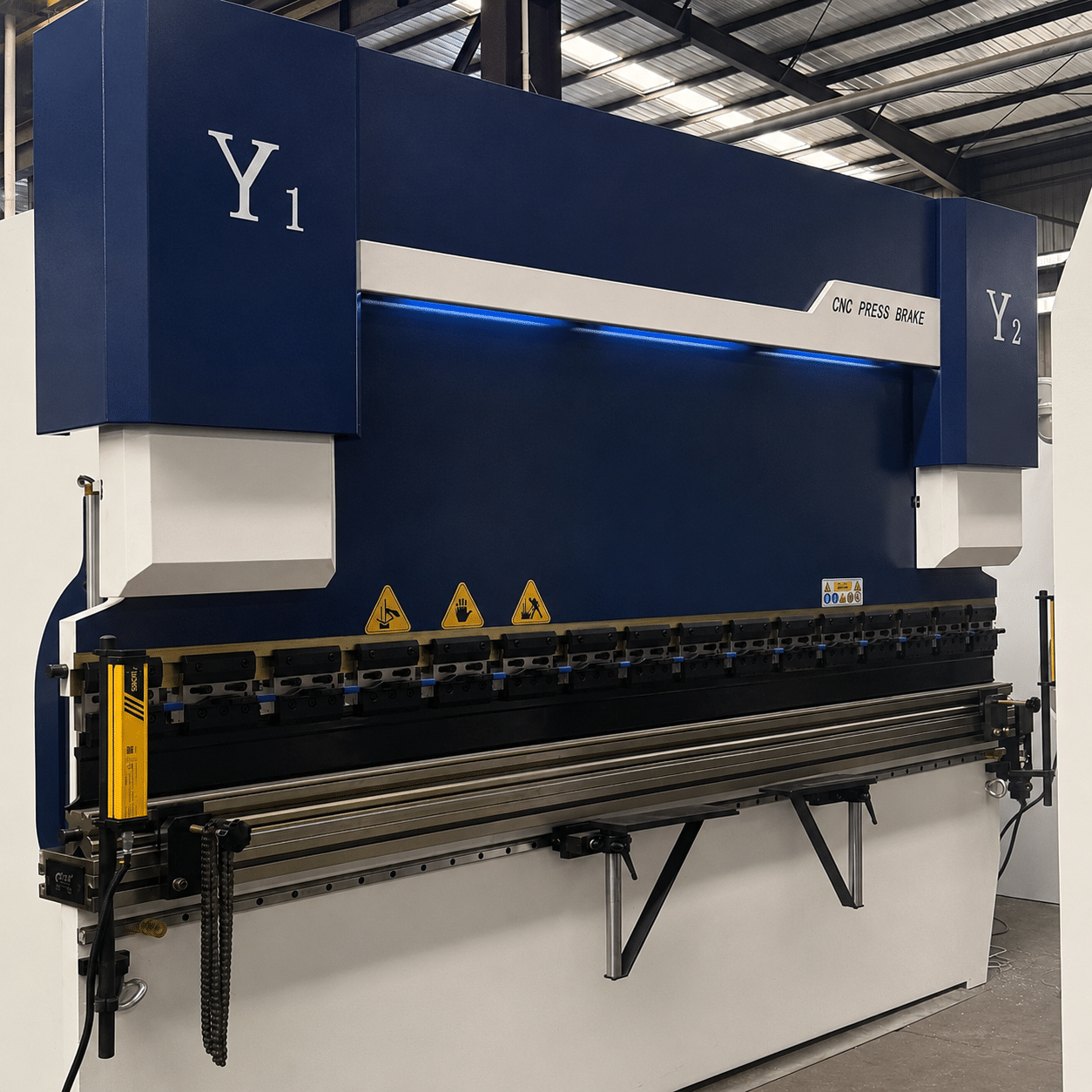
Why Stainless Steel Is More Likely to Crack During Bending
Higher Strength and Hardness
Stainless steel generally has higher tensile strength and hardness than ordinary carbon steel. During bending, more force is required to deform the material. If the bending force, tooling, or radius is not properly selected, stress concentration may occur at the bend area and cause cracks.
Greater Springback
Stainless steel has more obvious springback after bending. Operators often increase bending pressure to compensate for springback, but excessive pressure can increase the risk of cracking, surface indentation, and angle inconsistency.
Internal Material Stress
Residual stress generated during rolling and manufacturing processes can make stainless steel more sensitive to deformation. When bending force is applied, the internal stress may combine with external stress and increase the possibility of cracking.
Different Elongation Characteristics
Different stainless steel grades have different elongation and forming performance. Some stainless steel materials can tolerate tight bending, while others require a larger inside bend radius to avoid cracking.
Common Causes of Stainless Steel Bending Cracks
1. Bend Radius Is Too Small
One of the most common causes of stainless steel bending cracks is an inside bend radius that is too small. When the bend radius is too tight, the outer surface of the material is stretched excessively, causing cracks along the bend line.
In many metal fabrication workshops, insufficient bend radius remains one of the leading causes of bending failures.
2. Incorrect V-Die Selection
If the V-opening is too narrow, the material will experience higher forming pressure and greater stretching. This can easily lead to cracking, especially when bending thicker stainless steel plates.
Choosing the correct V-opening on a press brake machine is critical for reducing stress concentration and improving bending quality.
3. Improper Punch Angle
Using the wrong punch angle or die angle can create uneven stress during bending. This may result in poor angle accuracy, local deformation, and cracking at the bend position.
4. Excessive Bending Pressure
More tonnage does not always mean better bending quality. Excessive pressure may damage the stainless steel surface, increase stress concentration, and cause cracking or surface marks.
5. Material Quality Issues
Low-quality stainless steel sheets may have inconsistent hardness, internal defects, or poor ductility. These problems can make the material more likely to crack during bending.
6. Surface Scratches or Damage
Scratches, dents, and surface defects often become starting points for cracks. For stainless steel fabrication, surface protection is very important before and during bending.
How Grain Direction Affects Stainless Steel Bending
Grain direction is often ignored in stainless steel bending, but it has a direct influence on cracking risk.
Bending Across the Grain
When the bend line is perpendicular to the rolling direction, stainless steel usually performs better. This bending direction can reduce cracking risk and improve forming stability.
Bending Along the Grain
When the bend line is parallel to the rolling direction, the risk of cracking increases significantly. This is especially important for thick stainless steel sheets or parts with a small bend radius.
Best Practice
Before cutting and bending, manufacturers should consider material direction during layout planning. Correct material orientation can reduce defects and improve bending consistency.
Bending Considerations for Different Stainless Steel Thicknesses
Thin Stainless Steel Sheets
Thin stainless steel sheets are easier to form, but they are more sensitive to scratches and tooling marks. Clean tooling, proper pressure, and surface protection are important.
Medium Thickness Stainless Steel Sheets
Medium thickness stainless steel is widely used in sheet metal fabrication. Proper V-die selection, accurate tonnage calculation, and springback compensation are necessary for stable bending quality.
Thick Stainless Steel Plates
Thick stainless steel plates require higher bending force and larger bend radius. If the V-opening is too small or the punch radius is not suitable, cracking may occur more easily.
Heavy stainless steel plates are commonly used in construction manufacturing applications, where larger bend radii and higher tonnage are often required.
Industries That Require High-Quality Stainless Steel Bending
Stainless steel bending is widely used across multiple industries where precision, durability, and appearance are critical.
- Automotive Manufacturing
- Aerospace Manufacturing
- Elevator Manufacturing
- Shipbuilding Manufacturing
- Construction Manufacturing
How to Choose the Right Bending Setup for Stainless Steel
Select the Correct V-Opening
A suitable V-opening helps distribute bending force more evenly and reduces the risk of stainless steel bending cracks. For stainless steel, the die opening should not be too narrow, especially when processing medium or thick sheets.
Use a Proper Punch Radius
A larger punch radius can reduce stress concentration and help prevent cracks. For stainless steel, using a very sharp punch is usually not recommended.
Keep Tooling Surfaces Clean
Polished and clean tooling surfaces help reduce scratches and surface damage on stainless steel sheets. This is especially important for visible parts and high-quality fabrication projects.
Use Stable CNC Control
Stable CNC control helps operators achieve accurate angles, repeatable bending results, and better compensation for springback. This is important when producing stainless steel parts in batches.
How to Reduce Stainless Steel Bending Cracks
Increase Bend Radius
Increasing the inside bend radius is one of the most effective ways to reduce cracking. A larger radius allows the material to stretch more smoothly during bending.
Choose the Correct V-Die Width
A suitable V-opening reduces excessive pressure and improves material flow. This is especially important for thick stainless steel and high-strength materials.
Control Bending Pressure
Operators should avoid using unnecessary tonnage. Accurate pressure control helps reduce cracks, deformation, and surface damage.
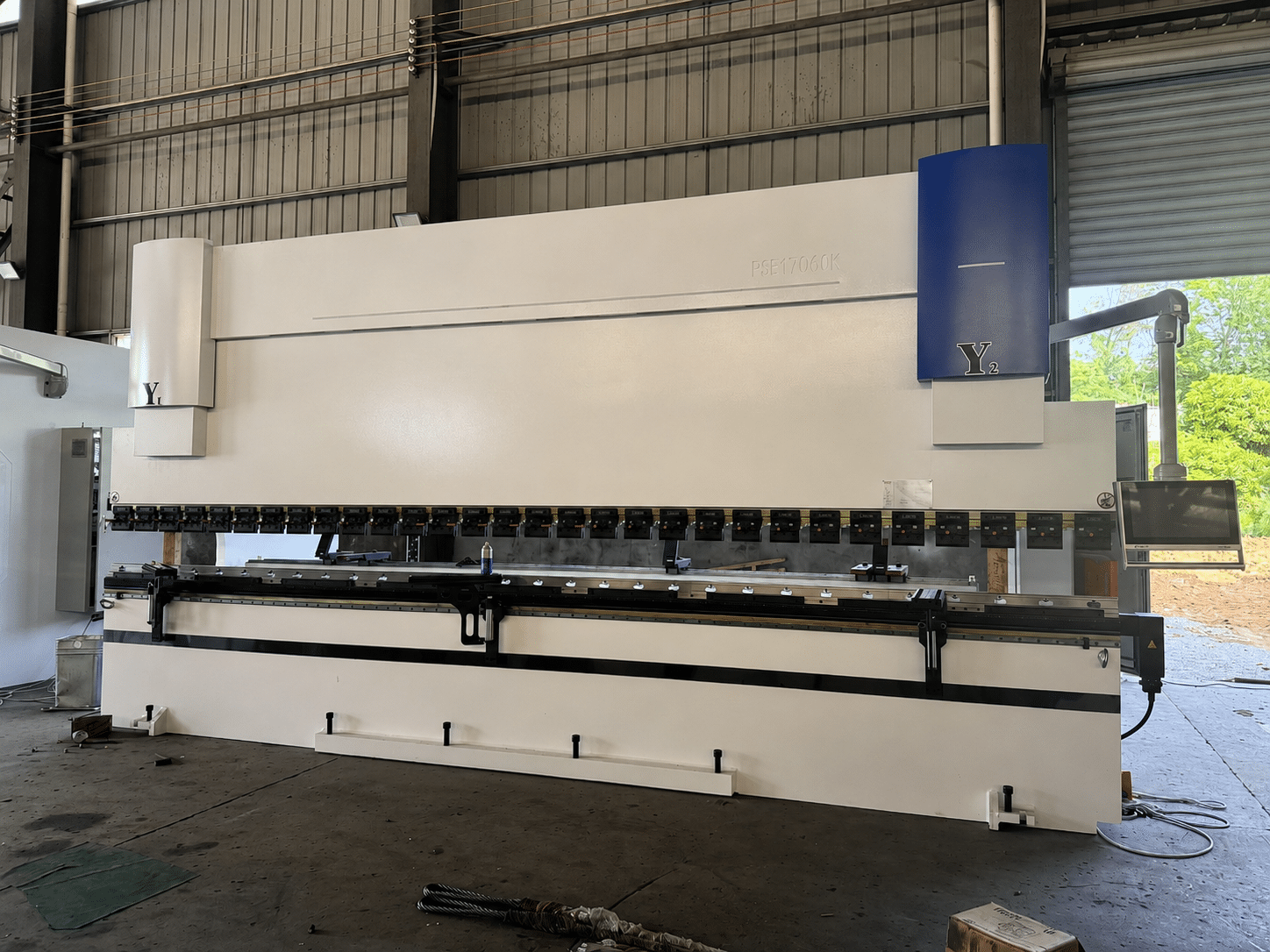
Use a Servo CNC Press Brake
A modern servo CNC press brake provides better positioning accuracy, stable bending force, and improved angle control. For stainless steel bending applications, this helps reduce defects and improve product consistency.
Many manufacturers combine advanced CNC press brakes with laser cutting machines to improve overall production efficiency and part accuracy.
Reduce Surface Damage
Before bending, stainless steel sheets should be inspected for scratches, dents, and surface defects. Protective film and clean handling can help improve finished product quality.
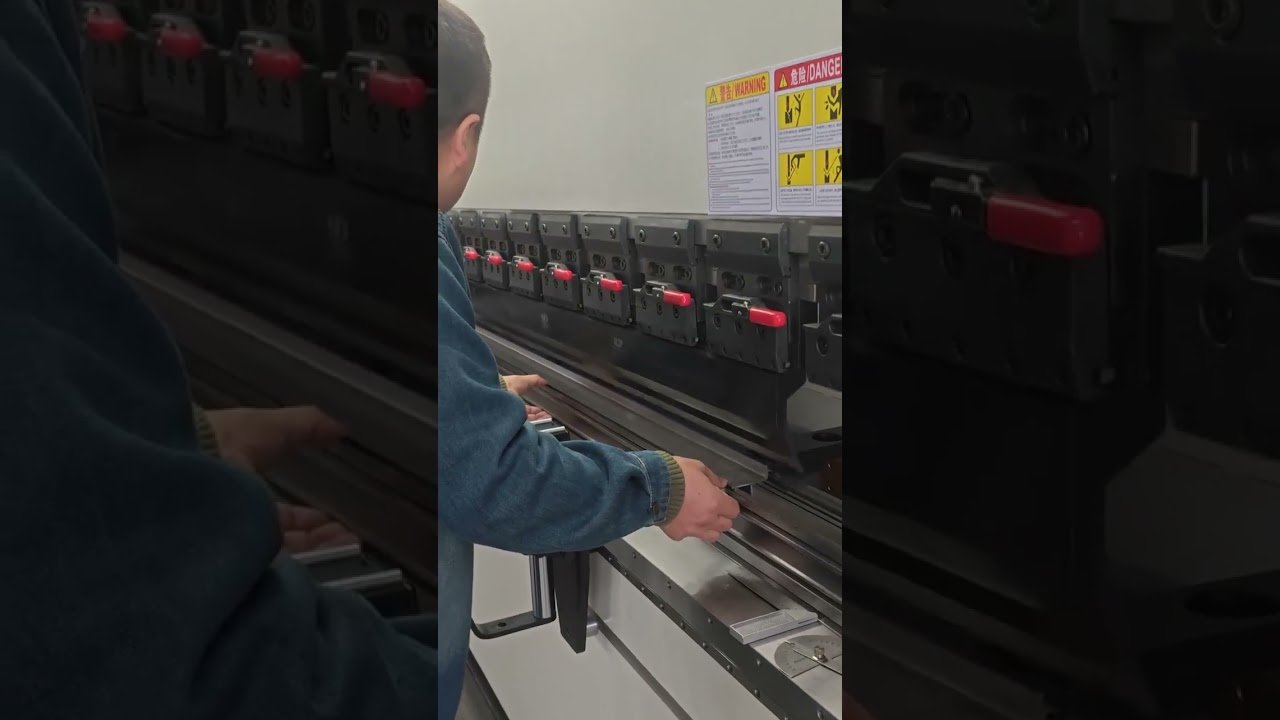
Stainless Steel Bending Video Demonstration
The following video shows stainless steel bending on a CNC press brake. With proper machine setup, suitable tooling, and accurate bending control, manufacturers can achieve smooth bends while reducing the risk of cracking and surface damage.
Common Mistakes in Stainless Steel Bending
- Only focusing on machine tonnage
- Ignoring material direction
- Using the wrong bend radius
- Ignoring springback compensation
- Using dirty or damaged tooling surfaces
More sheet metal processing solutions can be found on our Applications Page.
Frequently Asked Questions
Why does stainless steel crack during bending?
The most common causes are insufficient bend radius, incorrect V-die selection, excessive pressure, poor material quality, surface scratches, and incorrect grain direction.
How can I prevent stainless steel bending cracks?
You can prevent stainless steel bending cracks by increasing the bend radius, selecting the proper V-opening, controlling bending pressure, protecting the material surface, and using a high-precision CNC press brake.
Does grain direction affect stainless steel bending?
Yes. Bending parallel to the rolling direction increases the risk of cracking, while bending across the grain usually provides better forming results.
Is a CNC press brake suitable for stainless steel bending?
Yes. A CNC press brake is suitable for stainless steel bending because it provides accurate positioning, repeatable angle control, and stable bending performance.
Why is springback more obvious in stainless steel?
Stainless steel has higher strength and elasticity than mild steel, so it tends to spring back more after bending. Proper CNC compensation is important for accurate angles.
What industries commonly use stainless steel bending?
Automotive, aerospace, elevator, shipbuilding, and construction industries all rely heavily on high-quality stainless steel bending processes.
Where can I learn more about sheet metal fabrication technology?
Visit our News & Updates page for more press brake, laser cutting, and sheet metal fabrication articles.
Conclusion
Reducing stainless steel bending cracks requires a complete understanding of material properties, bend radius, grain direction, V-die selection, pressure control, and machine accuracy.
Cracking is rarely caused by only one factor. In most cases, it is the result of material, tooling, and process problems working together. By using proper bending parameters and a high-precision CNC press brake, manufacturers can improve bending quality, reduce scrap rates, and achieve more stable production results.
Need Professional Stainless Steel Bending Solutions?
Whether you work in automotive, aerospace, construction, elevator, or shipbuilding industries, our engineering team can help you select the right machine and bending solution.