
Hydraulic press brake vs servo CNC press brake is one of the most common questions for sheet metal manufacturers when choosing a new bending machine. As the sheet metal fabrication industry requires higher bending accuracy, faster production speed, lower energy consumption, and better automation, many workshops need to compare these two press brake solutions before making an investment.
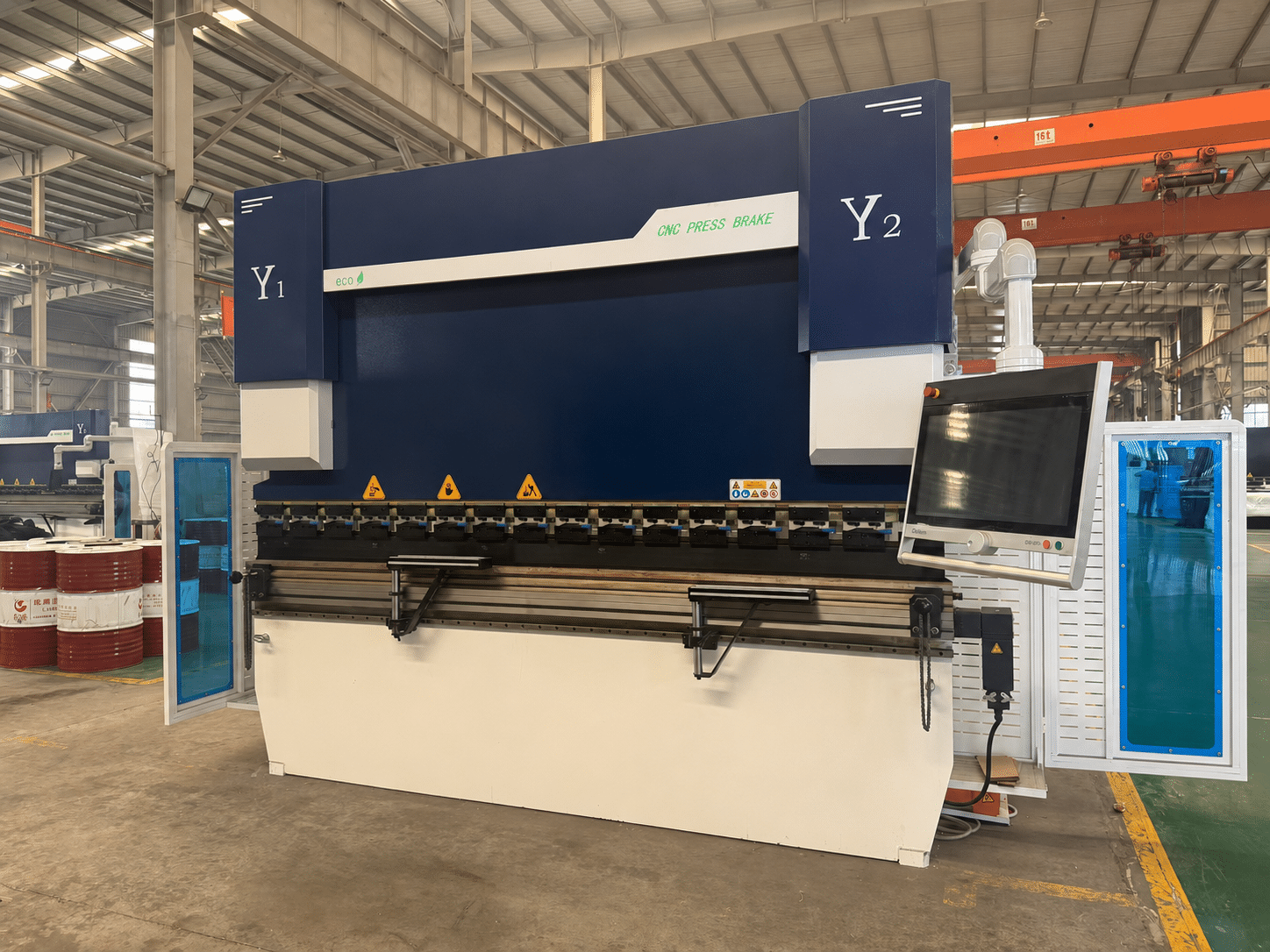
Should they choose a traditional hydraulic press brake or a servo CNC press brake?
Both machines are widely used in metal fabrication workshops, but they are designed for different production needs. A traditional hydraulic press brake is still a reliable choice for many standard bending jobs, while a servo CNC press brake is becoming increasingly popular for manufacturers that require higher precision, better efficiency, lower noise, and reduced long-term operating costs.
In this article, we compare hydraulic press brakes and servo CNC press brakes from the perspective of accuracy, production efficiency, energy consumption, maintenance, working environment, and industry applications. If you are planning to purchase a new bending machine, this guide can help you choose a suitable press brake machine for your workshop.
What Is a Traditional Hydraulic Press Brake?
A traditional hydraulic press brake uses hydraulic cylinders to drive the ram downward and apply bending force to the sheet metal. The hydraulic system generates pressure through hydraulic oil, pumps, valves, and cylinders, allowing the machine to bend carbon steel, stainless steel, aluminum, and other metal sheets.
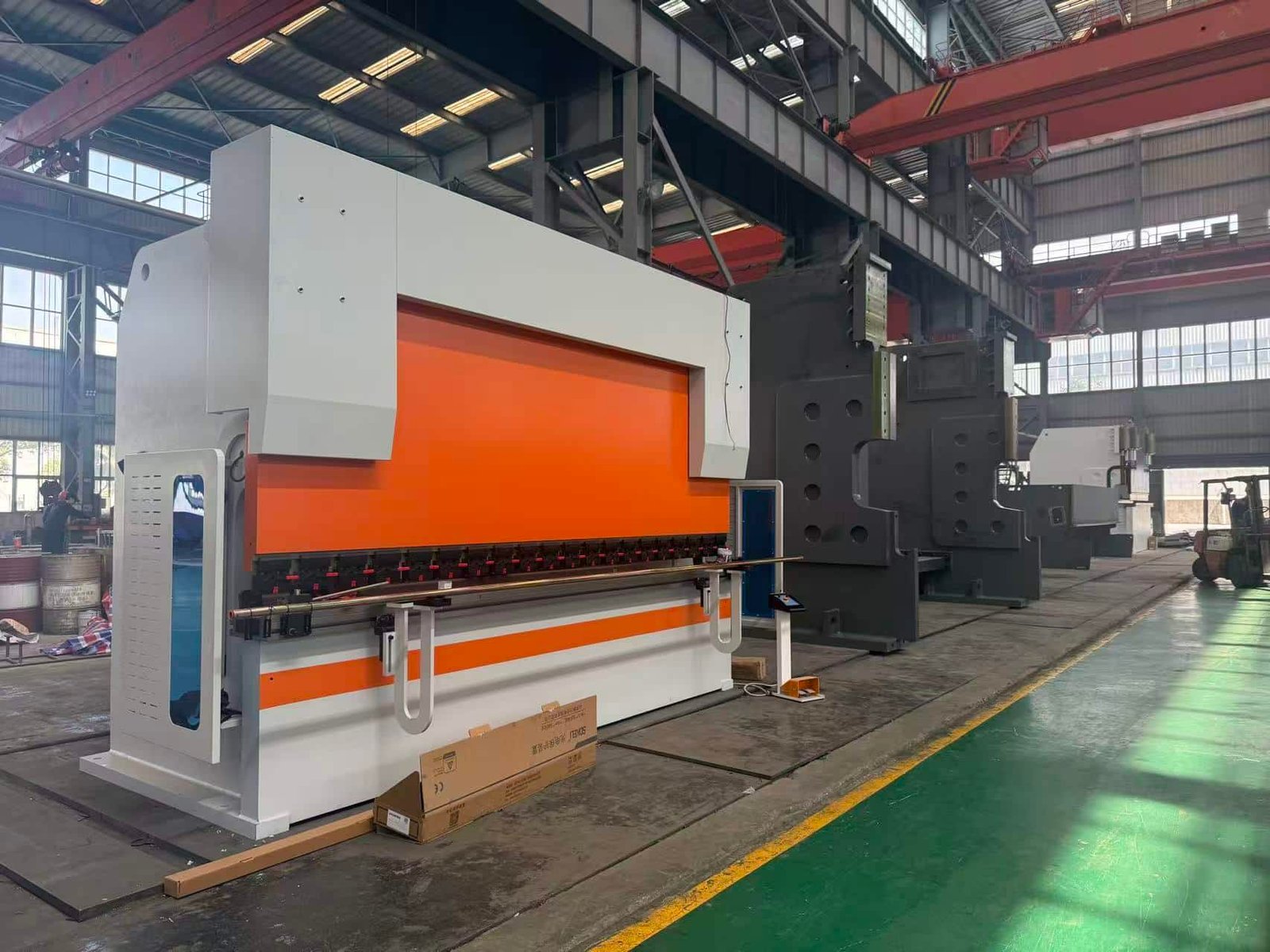
Hydraulic press brakes are commonly used in:
- General sheet metal fabrication
- Metal cabinets
- Construction parts
- Steel structures
- HVAC parts
- Medium and thick plate bending
- Standard industrial bending jobs
The biggest advantage of a hydraulic press brake is its strong bending force and wide application range. For workshops that mainly process standard parts or thicker plates, a hydraulic system can still provide reliable performance and good cost control.
However, hydraulic systems also require regular maintenance, including hydraulic oil inspection, sealing component checks, oil temperature control, and system cleaning. For customers who run the machine for long working hours every day, energy consumption and maintenance cost may become important factors.
What Is a Servo CNC Press Brake?
A servo CNC press brake uses servo-driven or servo-controlled technology to improve bending accuracy, response speed, energy efficiency, and operational stability. Compared with traditional hydraulic systems, servo systems can provide faster response, more precise positioning, and better control over the bending process.

In modern sheet metal production, servo CNC press brakes are often used for:
- High-precision sheet metal parts
- Electrical cabinets
- Elevator components
- Automotive parts
- Aerospace sheet metal components
- Automation equipment parts
- Batch production with repeated bending programs
A servo CNC press brake is especially suitable for factories that need accurate angle control, stable repeatability, lower noise, and more efficient long-term production. For manufacturers upgrading from traditional bending machines, servo technology can help improve production quality and reduce operating costs.
If your workshop requires a more advanced bending solution, you can review our CNC press brake machines or contact our team for machine configuration support.
Hydraulic Press Brake vs Servo CNC Press Brake: Main Differences
| Comparison Item | Traditional Hydraulic Press Brake | Servo CNC Press Brake |
|---|---|---|
| Drive System | Hydraulic oil, pump, valve, cylinder | Servo motor or servo-controlled system |
| Accuracy | Suitable for general bending | Higher positioning accuracy and repeatability |
| Energy Consumption | Hydraulic pump often runs continuously | Energy-saving operation, especially during standby or partial load |
| Noise Level | Higher noise from hydraulic system | Lower noise and better workshop environment |
| Maintenance | Requires hydraulic oil and sealing maintenance | Lower mechanical and hydraulic maintenance requirements |
| Production Efficiency | Suitable for standard production | Faster response, easier program control, better for batch production |
| Best For | Standard bending, thick plates, budget-sensitive users | High-precision, long-hour production, energy-saving workshops |
| Long-Term Cost | Lower initial investment, higher maintenance and energy cost | Higher initial investment, better long-term operating efficiency |
Accuracy Comparison
Accuracy is one of the main reasons why many manufacturers compare hydraulic press brakes with servo CNC press brakes.
For standard sheet metal bending, a traditional hydraulic press brake can meet many common production needs. However, when customers require higher repeatability, stable angle control, and better consistency across long workpieces, servo CNC systems usually provide better performance.
A servo CNC press brake can improve accuracy through:
- Faster servo response
- More stable ram control
- Better repeat positioning
- Improved CNC program control
- More accurate Y1/Y2 synchronization
- Better coordination with crowning compensation
For long workpieces, bending accuracy is also affected by machine frame rigidity, crowning compensation, tooling quality, material springback, and operator setup. A good CNC system and stable machine structure are important for both hydraulic and servo press brakes.
For applications such as elevator manufacturing, electrical cabinets, and precision metal enclosures, angle consistency and repeatability are especially important.
Production Efficiency Comparison
Production efficiency is another major difference between hydraulic and servo CNC press brakes.
Traditional hydraulic press brakes can handle a wide range of bending jobs, but their response speed, setup time, and energy usage may not be ideal for high-volume production. In many workshops, operators need to spend more time on adjustment, testing, and angle correction.
Servo CNC press brakes are better suited for production environments that require:
- Faster machine response
- Shorter setup time
- Quick program recall
- Stable repeated bending
- Higher daily output
- Better coordination with automatic production processes
For factories that produce repeated parts every day, such as cabinet panels, elevator parts, metal boxes, and precision sheet metal components, a servo CNC press brake can help reduce adjustment time and improve overall production efficiency.
If your factory is building a complete sheet metal workflow, a press brake can also work together with a laser cutting machine, shearing machine, or other sheet metal fabrication applications.
Energy Consumption and Running Cost
Energy consumption is one of the most important long-term cost factors when choosing between a hydraulic press brake and a servo CNC press brake.
A traditional hydraulic press brake usually relies on a hydraulic pump system. In many working conditions, the hydraulic system continues running even when the machine is not actively bending. This can increase electricity consumption during long working hours.
A servo CNC press brake is designed to use energy more efficiently. The servo system usually consumes more power only when the machine is actively moving or bending. During standby or low-load conditions, energy consumption can be reduced.
For workshops running one shift per day, the difference may not be very obvious at first. But for factories running long production hours, multiple shifts, or high-volume bending jobs, the energy-saving advantage of servo CNC press brakes can become more valuable over time.
When calculating the real machine cost, buyers should not only compare the purchase price. They should also consider:
- Daily working hours
- Electricity cost
- Maintenance cost
- Hydraulic oil cost
- Downtime cost
- Operator efficiency
- Long-term production volume
A lower initial machine price does not always mean lower total cost.
Noise and Working Environment
Noise level is often ignored during machine selection, but it directly affects the working environment.
Traditional hydraulic press brakes usually generate more noise because of the hydraulic pump, oil flow, valves, and mechanical movement. In busy workshops, this can make the working environment louder and less comfortable.
Servo CNC press brakes are usually quieter during operation. Lower noise is especially useful for factories that focus on:
- Modern workshop management
- Operator comfort
- Cleaner production environment
- Long working hours
- High-end manufacturing
For customers upgrading old machines, lower noise and smoother operation are often noticeable improvements after switching to servo-controlled bending equipment.
Maintenance and Failure Rate
Maintenance is another key point when comparing these two types of bending machines.
A hydraulic press brake requires regular maintenance of:
- Hydraulic oil
- Oil filters
- Sealing components
- Hydraulic cylinders
- Valves
- Oil temperature
- Hydraulic pipelines
If the hydraulic system is not properly maintained, problems such as oil leakage, unstable pressure, temperature rise, and bending instability may occur.
A servo CNC press brake usually reduces some hydraulic maintenance requirements. However, the servo system, control system, electrical components, and software settings must be stable and properly configured. This means the machine supplier’s design, assembly quality, testing process, and after-sales support are very important.
Before choosing a machine, customers should consider not only the machine structure, but also the manufacturer’s production experience, testing process, and technical support. You can learn more about our manufacturing background on our About Us page.
Which Machine Is Better for Different Industries?
Different industries require different bending machines. There is no single machine that is best for every workshop.
Elevator Manufacturing
Elevator panels require good surface quality, accurate bending angles, and stable long-part processing. Servo CNC press brakes are often more suitable for customers who require high precision and repeated production. You can also explore our solutions for elevator manufacturing machinery.
HVAC Industry
HVAC parts usually require fast production, repeated bending, and stable output. Both hydraulic and servo CNC press brakes can be used, depending on budget, production volume, and accuracy requirements.
Precision Sheet Metal Fabrication
For precision enclosures, control cabinets, electronic housings, and automation parts, a servo CNC press brake is often a better choice because it provides higher repeatability and better control.
Automotive Manufacturing
Automotive parts require reliable accuracy and stable production. For customers in this industry, servo CNC press brakes can help improve consistency and efficiency. Related sheet metal processing solutions are also used in automotive manufacturing.
Aerospace Manufacturing
Aerospace sheet metal parts usually require high precision, strict process control, and stable repeatability. Servo CNC press brakes are more suitable for high-end and precision-focused applications. You can view more application information for aerospace manufacturing machinery.
Shipbuilding and Heavy Fabrication
For thick plates, long workpieces, and heavy-duty bending, hydraulic press brakes still have strong advantages. Heavy fabrication customers can also refer to our shipbuilding manufacturing machinery solutions.
Construction and Steel Structure
Construction-related metal components often require strong bending force, stable structure, and heavy-duty performance. Hydraulic press brakes are commonly used, while servo CNC systems can be selected when higher accuracy or efficiency is required. More related solutions are available for construction manufacturing machinery.
Who Should Choose a Servo CNC Press Brake?
A servo CNC press brake is more suitable for customers who need:
- Higher bending accuracy
- Better repeat positioning
- Lower energy consumption
- Lower noise operation
- Faster production response
- Long working hours
- Batch production
- More stable angle consistency
- Modern workshop upgrading
- Higher automation requirements
If your workshop mainly produces precision sheet metal parts, elevator panels, electrical cabinets, automotive components, or repeated batch parts, a servo CNC press brake can be a strong long-term investment.
Who Should Choose a Hydraulic Press Brake?
A traditional hydraulic press brake is still a good choice for many customers, especially when:
- The budget is limited
- The workpieces are relatively standard
- The factory processes medium or thick plates
- The production volume is not extremely high
- The customer requires strong bending force
- The machine is used for general metal fabrication
For many small and medium metalworking workshops, hydraulic press brakes remain practical, reliable, and cost-effective.
Practical Factory Experience
In real factory applications, many customers do not make a decision based only on machine price. They compare the machine according to production requirements, operator skill level, material type, accuracy demand, and long-term running cost.
For example, a customer using an older hydraulic press brake may face problems such as angle adjustment time, high noise, oil maintenance, and unstable repeat accuracy. After upgrading to a servo CNC press brake, the workshop may benefit from faster response, better repeatability, lower noise, and reduced energy consumption.
However, if the customer mainly processes thick plates and does not require very high accuracy or repeated batch production, a hydraulic press brake can still be a suitable and economical solution.
The best choice depends on the real production situation.
How to Choose the Right Press Brake for Your Workshop
Before choosing between a hydraulic press brake and a servo CNC press brake, customers should prepare the following information:
| Selection Factor | Why It Matters |
|---|---|
| Material Type | Carbon steel, stainless steel, aluminum, and other materials require different bending force. |
| Sheet Thickness | Determines press brake tonnage and tooling selection. |
| Bending Length | Determines machine working length. |
| Accuracy Requirement | Higher precision usually requires better CNC control and compensation. |
| Production Volume | Batch production may benefit more from servo CNC systems. |
| Workpiece Type | Long parts, small parts, thick plates, and precision parts need different configurations. |
| Budget | Initial investment and long-term running cost should both be considered. |
| Automation Requirement | Higher automation may require servo systems, CNC backgauge, or panel bending solutions. |
If you are not sure which machine is suitable, you can send your bending drawings, material thickness, bending length, and production requirements to our team. We can recommend a suitable press brake configuration based on your application.
Related Machines for Sheet Metal Fabrication
A press brake is often used together with other sheet metal fabrication machines. For a complete metalworking workshop, customers may also need:
- Laser Cutting Machine for precise sheet metal cutting
- Shearing Machine for straight sheet cutting
- V Grooving Machine for high-quality decorative bending
- Panel Bender for automatic panel bending
- Punching Machine for hole punching and forming
- Rolling Machine for round and curved workpieces
- Hydraulic Press for forming, pressing, and correction
You can also visit our metal fabrication workshop solutions page to see how different machines work together in sheet metal production.
FAQ
Is a servo CNC press brake more accurate than a hydraulic press brake?
In most precision sheet metal applications, a servo CNC press brake can provide better repeat positioning, faster response, and more stable control. However, final bending accuracy also depends on machine structure, tooling, material condition, crowning compensation, and operator setup.
Is a hydraulic press brake still worth buying?
Yes. A hydraulic press brake is still suitable for many workshops, especially for standard bending, medium or thick plate processing, and budget-sensitive applications. It remains a reliable and cost-effective bending solution.
Which press brake is better for high-volume production?
For repeated batch production, a servo CNC press brake is usually more suitable because it offers faster response, better program control, lower noise, and improved energy efficiency.
Does a servo CNC press brake save energy?
Yes. Compared with traditional hydraulic systems, servo CNC systems can reduce energy consumption, especially during standby, low-load, and repeated production conditions.
How do I know which press brake model to choose?
You need to consider material type, sheet thickness, bending length, accuracy requirements, production volume, and budget. You can contact our team and provide your workpiece drawings or bending requirements for machine selection support.
Conclusion
Both hydraulic press brakes and servo CNC press brakes have their own advantages.
A hydraulic press brake is suitable for standard bending, thick plate processing, general metal fabrication, and customers who need a practical machine with strong bending force and controlled investment.
A servo CNC press brake is better for customers who require high accuracy, better repeatability, energy saving, low noise, faster response, and long-term production efficiency.
If your workshop is upgrading equipment or planning a new sheet metal production line, choosing the right press brake can directly affect product quality, production cost, and long-term competitiveness.
Need Help Choosing the Right Press Brake?
For professional machine selection support, please contact DG Bending Machine and send us your material type, sheet thickness, bending length, drawings, production capacity, and budget. Our team will help you recommend a suitable bending machine solution.