
CNC press brake problems are common during long-term production. Identifying issues early and applying the correct solutions can significantly improve production efficiency, bending accuracy, and machine reliability.
Whether you are operating a hydraulic press brake or a servo CNC press brake, understanding common problems can help reduce downtime and maintenance costs.
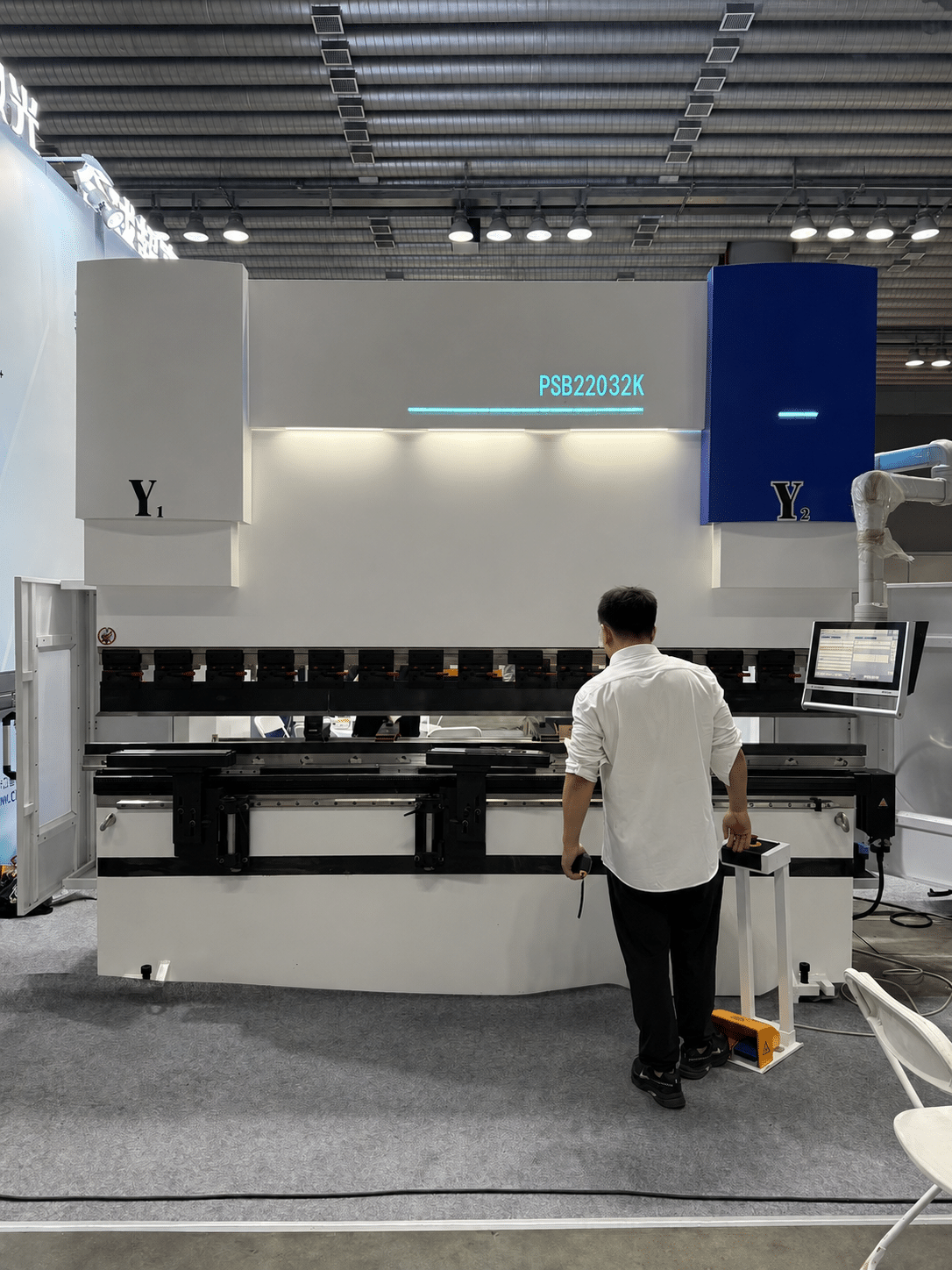
If you are looking for different machine configurations, you can explore our CNC Press Brake Machines.
Common Bending Angle Problems
Different Angles on the Left and Right Sides
This problem is often caused by synchronization errors, machine deflection, or incorrect crowning compensation.
You can learn more about synchronization systems in our guide:
What Is Press Brake Y1 Y2 Axis?
Unstable Angles in Batch Production
When the same program produces different bending angles, possible causes include material inconsistencies, hydraulic pressure fluctuations, or tooling wear.
Excessive Springback
Different materials have different springback characteristics. Incorrect bending parameters may result in larger-than-expected angle deviations.
Angle Deviation on Long Workpieces
Long sheet metal parts may show larger angle errors in the center area due to machine deflection and insufficient crowning compensation.
Read our detailed explanation here:
How Press Brake Crowning Systems Improve Bending Accuracy
Backgauge Positioning Problems
Poor Repeat Positioning Accuracy
Wear on guide rails, ball screws, or sensors may reduce positioning precision.
Jerky Movement
Dust, poor lubrication, or mechanical wear can cause unstable movement.
Servo Motor Alarms
Servo alarms may indicate encoder faults, communication issues, or motor overload.
Guide Rail Wear
Long-term operation may cause guide rail wear, leading to positioning deviations.
Hydraulic System Problems
Unstable Hydraulic Pressure
Pressure fluctuations often cause inconsistent bending results.
High Hydraulic Oil Temperature
Overheating may reduce oil viscosity and affect machine performance.
You can also read our maintenance guide:
Why Hydraulic Oil Affects Press Brake Stability
Excessive Pump Noise
Hydraulic pump noise may indicate air contamination, oil shortages, or pump wear.
Oil Leakage
Leaks can reduce pressure and contaminate the working environment.
Abnormal Ram Speed
Slow or unstable ram movement often indicates hydraulic system problems.
CNC Controller Problems
System Alarms
Alarm messages may indicate sensor faults, communication errors, or hardware problems.
Programs Fail to Run
Incorrect parameters or damaged files may prevent machine operation.
Parameter Errors
Improper settings can directly affect bending accuracy.
Data Loss
Power failures or incorrect backups may result in data loss.
Slow System Response
Outdated hardware or overloaded controllers may reduce operating efficiency.
Tooling Problems
Tool Wear
Worn tooling reduces bending consistency and accuracy.
Improper Tool Alignment
Incorrect installation may cause uneven bending angles.
Wrong V-Opening Selection
Choosing the wrong V-opening can lead to poor bending results.
Cracked or Deformed Tooling
Damaged tooling should be replaced immediately to prevent production defects.
Mechanical Structure Problems
Ram Imbalance
Synchronization issues may cause uneven movement.
Frame Deformation
Heavy-duty bending applications may create structural stress over time.
Guide Rail Wear
Worn guide rails affect machine stability and positioning accuracy.
Ball Screw Accuracy Reduction
Backgauge accuracy may decrease when ball screws wear out.
How to Quickly Troubleshoot Press Brake Problems
A systematic troubleshooting process can save significant time.
- Check material thickness, hardness, and consistency.
- Inspect tooling wear and alignment.
- Verify hydraulic pressure and oil condition.
- Review CNC parameters and programs.
- Inspect synchronization systems and sensors.
How to Reduce Equipment Failure Rates
- Perform regular maintenance.
- Operate equipment correctly.
- Calibrate machine accuracy periodically.
- Use high-quality hydraulic oil and tooling.
- Create a preventive maintenance plan.
Real Factory Experience
One customer reported unstable bending angles during batch production. After a complete inspection, the root cause was identified as contaminated hydraulic oil combined with worn tooling.
The hydraulic oil was replaced, the tooling was renewed, and the machine was recalibrated. As a result, bending consistency improved significantly and production efficiency increased.
This case demonstrates the importance of systematic troubleshooting rather than replacing components blindly.
Conclusion
CNC press brake problems can occur in bending accuracy, backgauge positioning, hydraulic systems, CNC controllers, tooling, or machine structures.
Early detection and proper troubleshooting help reduce downtime, improve bending quality, and extend machine lifespan.
If you need professional technical support or customized CNC press brake solutions, please contact our team for assistance.