
Elevator manufacturing requires more than one machine. A complete elevator sheet metal production line usually includes cutting, punching, grooving, bending, panel forming, fastening, welding, inspection, and assembly processes. For elevator factories, choosing the right sheet metal fabrication machines should be based on the actual elevator parts, material thickness, surface requirements, production volume, and automation needs.
In elevator production, different components require different machines. Door panels and cabin walls need a clean surface, accurate size, and sharp bending lines. Structural parts such as beams, frames, and car bottom components require higher strength, heavier material processing, and stable forming performance. For this reason, elevator manufacturers should not select machines only by price or single equipment capacity. The correct approach is to build the production line according to parts and processes.
This guide explains how to choose sheet metal fabrication machines for elevator manufacturing, including laser cutting machines, V grooving machines, CNC press brakes, panel benders, shearing machines, and complete metal fabrication workshop solutions.
1. Main Sheet Metal Parts in Elevator Manufacturing
Before choosing machines, an elevator manufacturer should first identify the main parts to be produced. Elevator sheet metal parts can generally be divided into three groups.
Elevator Covering Parts
Covering parts include elevator door panels, cabin walls, decorative stainless steel panels, ceiling panels, and visible interior panels.
The main requirements are:
- Large size
- Flat surface
- Clean appearance
- Accurate bending line
- Good surface protection
- Consistent batch quality
For these parts, the production focus is not only strength, but also appearance. Stainless steel elevator panels often require high-quality cutting, precise V grooving, and accurate bending to create sharp corners and smooth surfaces.
A large-format fiber laser cutting machine, V grooving machine, CNC press brake, and panel bender are commonly used for this type of production.
Elevator Structural Parts
Structural parts include upper beams, car bottom parts, brackets, frames, support parts, guide rail components, and other load-bearing metal components.
The main requirements are:
- Thick material processing
- Strong structural performance
- Stable dimensional accuracy
- Heavy-duty bending or forming
- Reliable welding and assembly
For structural elevator parts, the factory may need a large-format laser cutting machine that can process thicker carbon steel, together with a high-tonnage electro-hydraulic CNC press brake. For heavy parts, press brakes in the 500-ton class or higher may be considered depending on material thickness, bending length, and drawings.
Auxiliary and Connection Parts
Auxiliary parts include small brackets, holes, mounting plates, reinforcement parts, and connection components.
The main requirements are:
- Efficient hole processing
- Stable assembly accuracy
- Repeatable production
- Good connection strength
For these parts, punching machines, riveting machines, press riveting machines, spot welding machines, and stud welding machines may be used according to the production process.
2. Typical Elevator Sheet Metal Production Workflow
A complete elevator sheet metal production process usually follows this workflow:
Sheet Cutting → Punching / Hole Processing → V Grooving → Bending / Panel Bending → Riveting / Welding → Inspection → Assembly
Each process affects the next step. If the cutting size is inaccurate, bending accuracy will also be affected. If V grooving is ignored for decorative stainless steel panels, the final bending corner may be too large or the surface may not look sharp enough. If the bending machine is not matched with the material and part size, production efficiency and quality consistency may become unstable.
For this reason, elevator manufacturers should plan equipment as a complete production system instead of purchasing machines separately without considering process connection.
3. Machines Used in Elevator Sheet Metal Production
| Production Area | Main Machine | Main Function | Typical Elevator Parts |
|---|---|---|---|
| Cutting Area | Fiber Laser Cutting Machine | Precise sheet cutting, complex shapes, thick plate cutting | Door panels, cabin panels, beams, brackets |
| Rough Cutting Area | Shearing Machine | Straight-line cutting and rough sheet preparation | Standard rectangular sheets, simple panels |
| Hole Processing Area | Punching Machine | Repeated holes, louvers, ventilation openings, mounting holes | Brackets, panels, electrical parts |
| Grooving Area | V Grooving Machine | Sharp bending lines and decorative stainless steel bending | Elevator door panels, cabin walls, decorative panels |
| Bending Area | CNC Press Brake | General bending, structural bending, custom part forming | Frames, brackets, cabin panels, structural parts |
| Automatic Panel Forming | Panel Bender | Automatic bending for panel-type workpieces | Door panels, cabinet panels, elevator panels |
| Connection Area | Riveting / Spot Welding / Stud Welding | Connection, reinforcement, assembly | Back ribs, guide parts, mounting structures |
| Inspection Area | Measuring and Quality Control Tools | Dimensional and surface inspection | Finished panels and structural components |
4. Laser Cutting Machine for Elevator Manufacturing
A laser cutting machine is often the main cutting equipment in elevator manufacturing. It can cut stainless steel, carbon steel, aluminum, and other metal sheets with high precision and smooth edges.
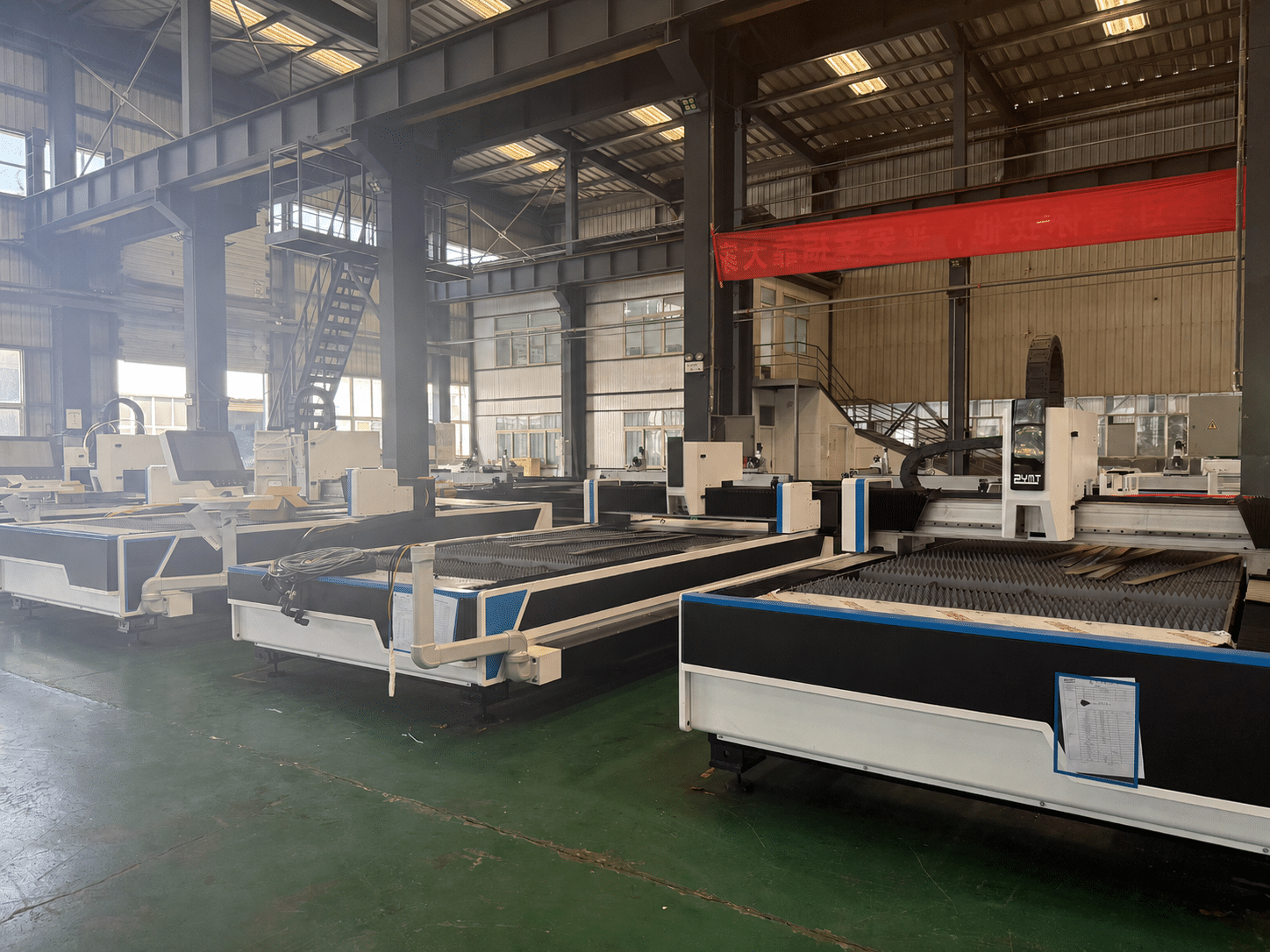
For elevator production, laser cutting is suitable for:
- Elevator door panels
- Cabin wall panels
- Decorative stainless steel sheets
- Structural frames
- Brackets and mounting parts
- Complex profiles and special shapes
For large elevator panels, a large-format laser cutting machine may be required. Some factories may consider a 6-meter-class working table or larger, depending on panel size and production requirements.
For structural components such as beams and car bottom parts, thicker carbon steel may be used. In this case, the laser cutting machine should be selected based on material thickness, cutting speed, edge quality, and power requirements.
When choosing a laser cutting machine for elevator manufacturing, customers should consider:
- Maximum sheet size
- Material type
- Maximum cutting thickness
- Required cutting accuracy
- Cutting speed
- Whether exchange table is needed
- Whether tube cutting is required
- Production volume
- Workshop layout
A laser cutting machine should also be matched with the bending capacity of the press brake. If the cutting speed is very high but bending capacity is not enough, the production line may still be limited by the forming process.
5. Why V Grooving Is Important for Elevator Panels
For medium and high-end elevator products, V grooving is one of the most important processes for improving appearance and bending quality.
Elevator door panels and cabin decorative panels often use stainless steel. If stainless steel is bent directly without grooving, the bending radius may be too large and the corner may not look sharp enough. V grooving reduces the material thickness at the bending line, allowing the panel to form a cleaner and sharper angle.
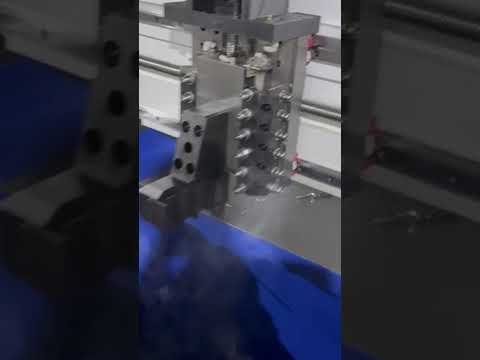
V grooving can help elevator manufacturers achieve:
- Sharper bending corners
- Better appearance for stainless steel panels
- Reduced surface deformation
- Better control of bending lines
- Lower bending force requirement
- Cleaner decorative panel quality
This is especially important for elevator door panels, cabin wall panels, and stainless steel decorative parts where the surface is visible to the final user.
However, V grooving depth must be controlled properly. If the groove is too shallow, the bending effect may not improve enough. If the groove is too deep, the strength of the panel may be affected. For this reason, the groove depth should be confirmed according to material thickness, bending angle, and product requirements.
6. CNC Press Brake for Elevator Structural and Panel Parts
A CNC press brake is the main forming machine for elevator sheet metal parts. It is used for bending cabin panels, frames, brackets, door structures, and structural components.
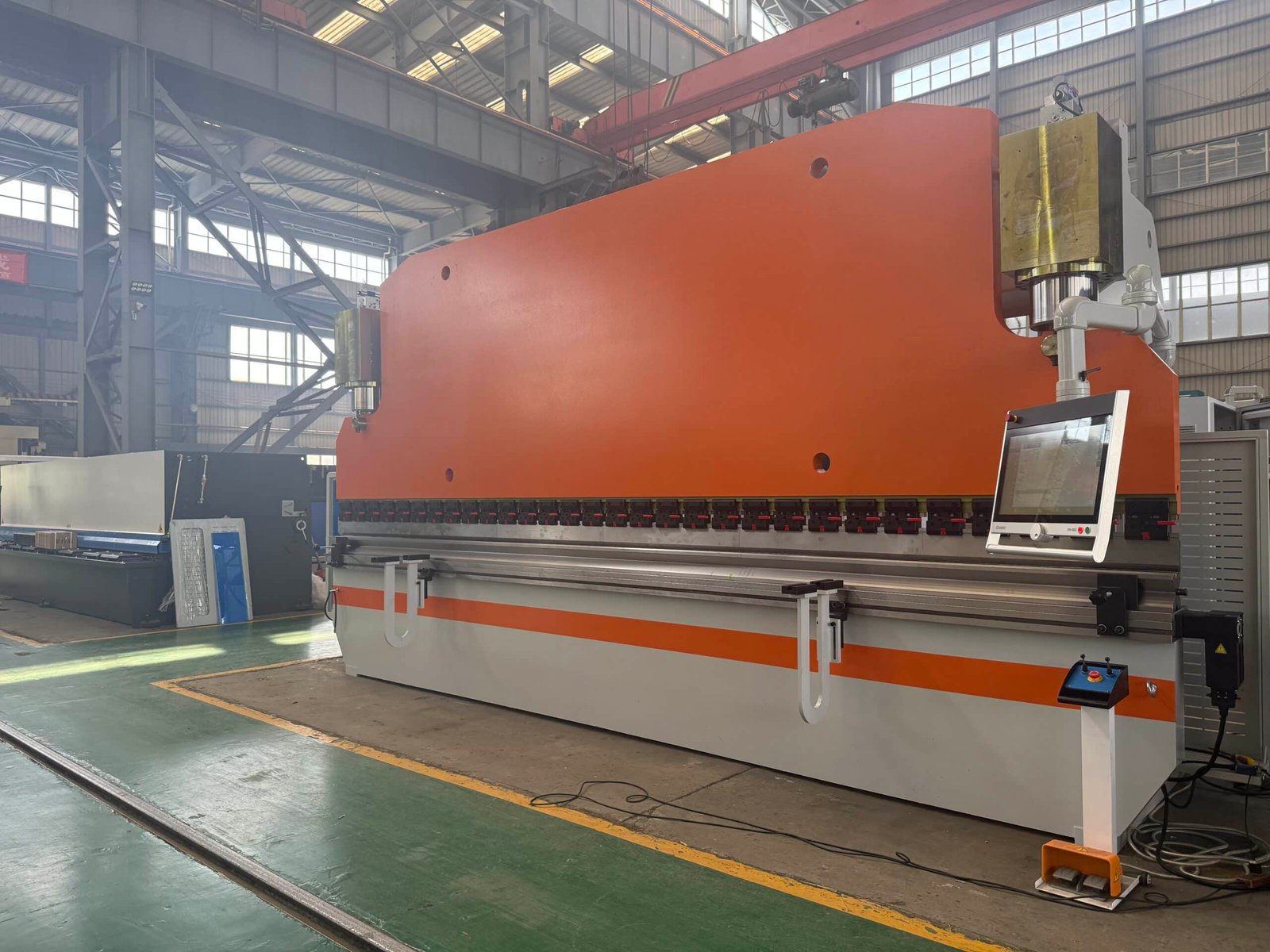
For elevator manufacturing, press brake selection should be based on:
- Material type
- Material thickness
- Bending length
- Required bending angle
- Part size
- Structural strength
- Production volume
- Accuracy requirement
For large elevator covering panels, a 4-meter-class or longer CNC press brake may be needed depending on the panel size. For thicker structural components, a high-tonnage electro-hydraulic servo press brake may be required. For example, some heavy-duty structural parts may need a 500-ton class press brake or higher, depending on the material and drawing.
For high-accuracy elevator parts, electro-hydraulic synchronous CNC press brakes are usually recommended because they provide stable ram synchronization, better angle control, and repeatable bending performance.
Important press brake configurations include:
- Y1/Y2 electro-hydraulic synchronization
- CNC control system
- Backgauge axis configuration
- Mechanical or hydraulic crowning
- Suitable tooling
- Safety system
- Larger throat depth if needed
- Longer working length if required
The press brake should not be selected only by tonnage. Working length, tooling, backgauge, control system, and compensation system all affect the final bending quality.
7. Panel Bender for Batch Elevator Panel Production
A panel bender is suitable for automatic bending of panel-type workpieces. In elevator manufacturing, it can be used for some door panels, cabin panels, cabinet-style parts, and repeated sheet metal products.
Compared with a traditional press brake, a panel bender has several advantages for suitable parts:
- Higher automation
- Lower manual operation requirement
- Faster production for repeated panels
- More stable bending consistency
- Good for batch panel production
- Reduced operator skill dependence
However, a panel bender is not suitable for every elevator part. It is more suitable for relatively standardized panel workpieces. For thick structural components, highly flexible custom parts, or heavy-duty bending, a CNC press brake is still necessary.
In many elevator factories, the best solution is not choosing only one machine. A CNC press brake and a panel bender can work together. The panel bender handles repeated panel-type parts, while the press brake handles flexible bending tasks, structural parts, and custom components.
8. Shearing Machine and Punching Machine in Elevator Production
Although laser cutting machines are widely used in modern elevator manufacturing, shearing machines can still be useful for simple straight-line cutting and rough sheet preparation.
A shearing machine is suitable for:
- Straight rectangular sheet cutting
- Rough material preparation
- Cost-sensitive production
- Simple sheet blanking
- High-volume straight cutting
However, shearing machines cannot replace laser cutting machines for complex shapes, holes, irregular profiles, or high-precision part outlines.
Punching machines are often used for:
- Repeated holes
- Louvers
- Ventilation openings
- Mounting holes
- Standard hole patterns
For elevator production, punching machines may be used as auxiliary equipment. They are especially useful when the factory produces many repeated hole patterns or louver-type structures.
9. How to Build an Elevator Sheet Metal Production Line
An elevator manufacturer can configure the production line according to product level, material type, and production volume.
Basic Production Line
A basic elevator sheet metal production line may include:
- Shearing machine
- CNC press brake
- Punching machine
- Riveting machine
- Welding equipment
This setup is suitable for smaller factories, simple sheet metal parts, and budget-sensitive production.
Standard Production Line
A standard elevator production line may include:
- Fiber laser cutting machine
- CNC press brake
- V grooving machine
- Punching machine
- Riveting / spot welding equipment
- Inspection tools
This setup is suitable for factories that produce stainless steel panels, cabin components, brackets, and general elevator sheet metal parts.
Advanced Production Line
An advanced elevator sheet metal line may include:
- Large-format fiber laser cutting machine
- CNC V grooving machine
- High-tonnage electro-hydraulic CNC press brake
- Automatic panel bender
- Punching machine
- Riveting / spot welding / stud welding equipment
- Automated material handling
- Quality inspection system
This setup is suitable for medium and large elevator manufacturers, especially those producing high-end stainless steel panels, large door panels, structural components, and batch production parts.
10. Common Mistakes When Choosing Elevator Manufacturing Machines
Only Considering One Machine
Some customers focus only on the press brake or laser cutting machine, but do not consider whether cutting, grooving, bending, and assembly processes match each other. This can create bottlenecks in production.
Ignoring V Grooving for Stainless Steel Panels
For decorative elevator panels, V grooving is often important for clean and sharp bending. Without grooving, stainless steel panels may have larger bending radii or less attractive corners.
Choosing Too Small a Press Brake
Elevator panels can be large and structural parts can be thick. If the press brake working length or tonnage is too small, the machine may not meet future production needs.
Buying High Automation Without Checking Product Type
A panel bender is useful for repeated panel-type parts, but it may not be suitable for every elevator component. The factory should evaluate part shape, batch volume, and product change frequency before investing.
Not Considering Surface Protection
Elevator visible panels require clean surfaces. Cutting, grooving, bending, handling, and storage should all consider surface protection to avoid scratches and deformation.
11. Recommended DGSSP Machine Combination for Elevator Manufacturing
For elevator manufacturing, DGSSP can provide sheet metal machinery solutions based on drawings, material thickness, part size, production volume, and automation requirements.
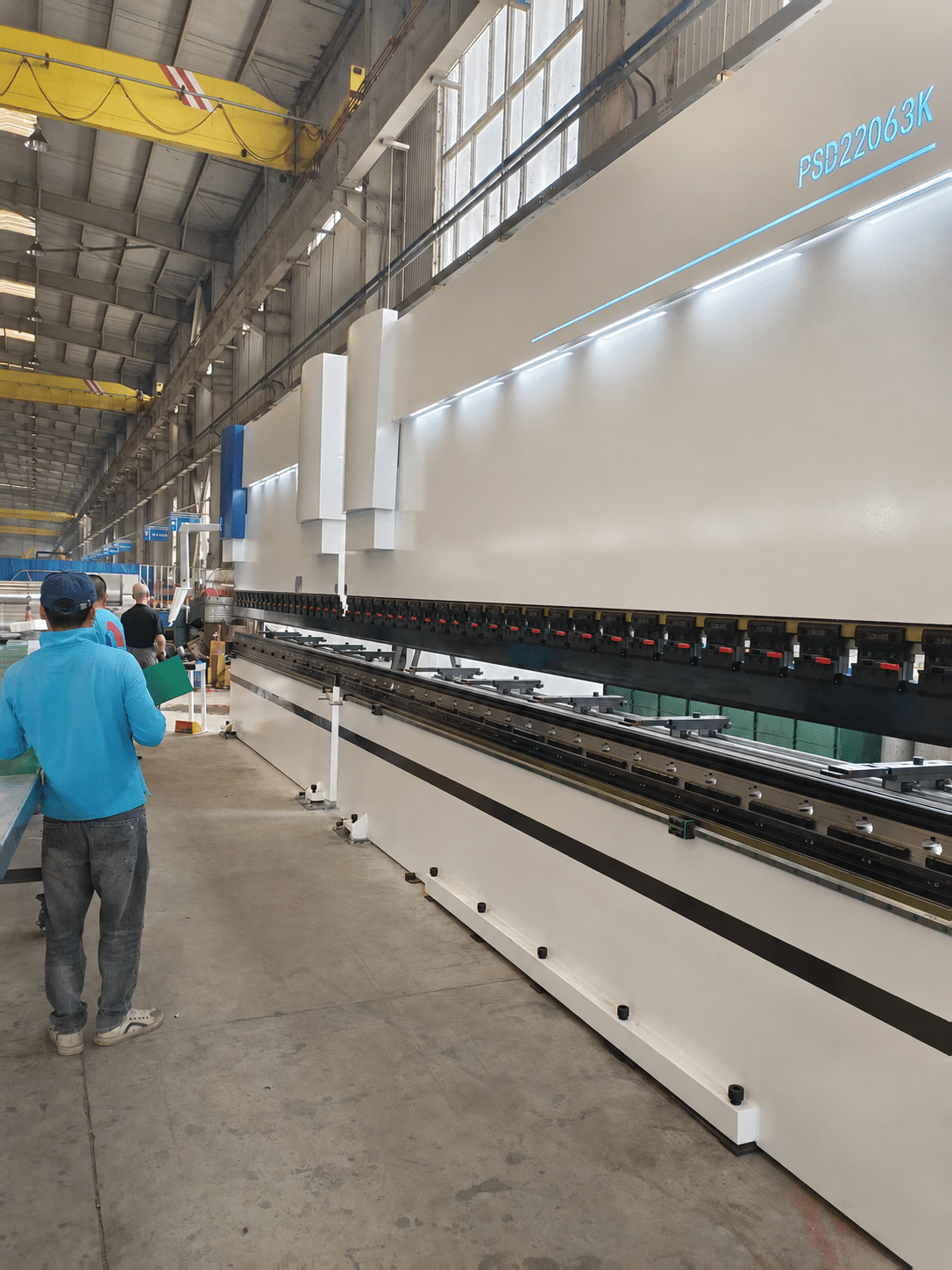
Recommended equipment may include:
- Fiber laser cutting machine for stainless steel, carbon steel, and large sheet cutting
- V grooving machine for stainless steel decorative panels and sharp bending lines
- CNC press brake for panel bending, structural bending, and general forming
- Panel bender for repeated panel-type elevator parts
- Shearing machine for straight sheet cutting and rough blanking
- Punching machine for repeated holes and special hole patterns
- Riveting and welding equipment for assembly and reinforcement
You can also review DGSSP’s Elevator Manufacturing Machinery solutions and broader Applications page to understand how different machines support industrial production.
FAQ
1. What machines are needed for elevator door panel production?
Elevator door panel production may require a fiber laser cutting machine, V grooving machine, CNC press brake, panel bender, punching machine, and riveting or welding equipment. The final configuration depends on panel size, material thickness, surface requirement, and production volume.
2. Why do stainless steel elevator panels need V grooving?
V grooving helps create sharper bending corners, improves the appearance of stainless steel panels, reduces bending radius, and lowers the bending force required. It is especially useful for visible elevator cabin panels and decorative door panels.
3. Is a panel bender suitable for elevator manufacturing?
Yes, a panel bender is suitable for repeated panel-type elevator components, such as door panels and cabin panels. However, it cannot completely replace a CNC press brake because structural parts, thick parts, and flexible custom parts may still require press brake bending.
4. What type of press brake is suitable for elevator manufacturing?
An electro-hydraulic synchronous CNC press brake is commonly recommended for elevator manufacturing because it provides stable bending accuracy, good repeatability, and better control for large or precision parts. For heavy structural components, higher tonnage may be required.
5. Can a shearing machine replace a laser cutting machine?
A shearing machine is suitable for straight-line cutting and rough sheet preparation, but it cannot replace a laser cutting machine for complex shapes, holes, irregular profiles, or high-precision cutting.
6. What information should I provide before choosing elevator manufacturing machines?
You should provide elevator part drawings, material type, material thickness, sheet size, surface requirement, bending length, production volume, automation requirement, workshop layout, and budget. This information helps the supplier recommend the correct machine combination.
Conclusion
Elevator manufacturing requires a complete sheet metal fabrication process. Door panels, cabin walls, decorative stainless steel panels, frames, beams, and structural parts all require different equipment and processing methods.
For high-quality elevator production, laser cutting machines, V grooving machines, CNC press brakes, panel benders, shearing machines, punching machines, riveting machines, and welding equipment should be selected according to real parts and production requirements.
If you are planning to build or upgrade an elevator sheet metal production line, contact DGSSP with your elevator panel drawings, material type, thickness, surface requirements, production volume, automation needs, and budget. Our team can help recommend a suitable machine configuration for your elevator manufacturing process.